Cryptoasset exposures
This chapter describes disclosure requirements for banks' exposures to cryptoassets.
- Effective as of: 01 Jan 2026
- Last update: 17 Jul 2024
- Status Current
Table CAEA: Qualitative disclosure on a bank's activities related to cryptoassets and the approach used in assessing the classification conditions
Template CAE1: Cryptoasset exposures and capital requirements
Template CAE2: Accounting classification of exposures to cryptoassets and cryptoliabilities
Template CAE3: Liquidity requirements for exposures to cryptoassets and cryptoliabilities
Introduction
55.1
The disclosure requirements set out in this chapter are:
- Table CAEA: Qualitative disclosure on a bank's activities related to cryptoassets and the approach used in assessing the classification conditions.
- Template CAE1: Cryptoasset exposures and capital requirements.
- Template CAE2: Accounting classification of exposures to cryptoassets and cryptoliabilities.
- Template CAE3: Liquidity requirements for exposures to cryptoassets and cryptoliabilities.
Table CAEA: Qualitative disclosure on a bank's activities related to cryptoassets and the approach used in assessing the classification conditions
TABLE.1
|
Purpose: To provide an overview of the bank's activities related to cryptoassets and the main risks related to its cryptoasset exposures as well as the approach used in assessing the classification conditions. |
|
|
Scope of application: The template is mandatory for all banks with exposures to cryptoassets or cryptoliabilities. |
|
|
Content: Qualitative information. |
|
|
Frequency: Annual. |
|
|
Format: Flexible. |
|
|
Banks must describe: |
|
|
(a) |
Their business activities related to cryptoassets, including inter alia owning cryptoassets directly, trading of cryptoassets on clients' accounts, equity investments in cryptoasset activities (eg cryptoasset exchanges and fund managers of cryptoasset exchange-traded funds) and the issuance of cryptoassets by the bank (ie cryptoliabilities of the bank). Banks must explicitly state if the bank is a member of cryptoasset arrangements as described in SCO60.36, acting as an intermediary in the redemption of cryptoassets. In such cases, banks must describe their role and the extent of any commitments to redeem or purchase back cryptoassets that may result from those activities. |
|
(b) |
For each activity in (a), how the activity translates into components of the bank's risk profile (including, but not limited to, credit, market, operational and/or liquidity risks) and the associated risk management policies (including, but not limited to, strategies and processes to manage, hedge and mitigate risks that arise from the bank's business activities and the processes for monitoring the continuing effectiveness of hedges and mitigants). |
|
(c) |
Scope and main content of the bank's reporting related to cryptoassets, including, but not limited to, how business activities result in the bank having cryptoasset exposures covered under the scope of the prudential treatment of cryptoassets and/or any material exposures to specific cryptoassets. |
|
(d) |
The most significant current risk(s) associated with the bank's activities related to cryptoassets and the bank's cryptoasset exposures and how this current risk is being managed. |
|
(e) |
The most significant emerging risk(s) associated with the bank's activities related to cryptoassets and the bank's cryptoasset exposures and how this emerging risk is being managed. |
|
(f) |
For exposures to Group 1 cryptoassets, the bank's approach to assessing each of the following classification conditions for each cryptoasset, including any public information used but excluding any confidential and proprietary information: i) Classification condition 1 SCO60.8 to SCO60.13 ii) Classification condition 2 SCO60.14 to SCO60.15 |
Template CAE1: Cryptoasset exposures and capital requirements
TABLE.2
|
Purpose: To provide an overview of a bank's exposures to cryptoassets according to the prudential classification of the cryptoassets (Groups 1a, 1b, 2a and 2b) and the related capital requirements. |
||||||||||
|
Scope of application: The template is mandatory for all banks with exposures to cryptoassets. |
||||||||||
|
Content: Exposures and capital requirements applicable to the bank's cryptoasset exposures excluding liquidity requirements which are contained in Template CAE3. |
||||||||||
|
Frequency: Semiannual. |
||||||||||
|
Format: Flexible. |
||||||||||
|
Accompanying narrative:
|
||||||||||
|
a |
b |
c |
d |
e |
f |
|||||
|
Credit risk |
Market risk |
|||||||||
|
Total exposure |
Exposure/EAD |
RWA |
Long exposure |
Short exposure |
RWA |
|||||
|
1 |
Group 1a |
|||||||||
|
2 |
Group 1b |
|||||||||
|
2.i |
Of which: Cryptoasset XXX |
|||||||||
|
2.ii |
Of which: Cryptoasset YYY |
|||||||||
|
... |
||||||||||
|
3 |
Group 2a |
|||||||||
|
3.i |
Of which: Cryptoasset XXX |
|||||||||
|
3.ii |
Of which: Cryptoasset YYY |
|||||||||
|
... |
||||||||||
|
4 |
Group 2b |
|||||||||
|
4.i |
Of which: Cryptoasset XXX |
|||||||||
|
4.ii |
Of which: Cryptoasset YYY |
|||||||||
|
... |
||||||||||
|
5 |
TOTAL |
|||||||||
|
6 |
Group 2 exposure limit – direct holdings |
|||||||||
|
7 |
Group 2 exposure limit – indirect holdings |
|||||||||
|
8 |
Group 2 exposure limit – exposure above the 1% limit |
|||||||||
|
9 |
Group 2 exposure limit – RWA above the 1% limit |
|||||||||
|
10 |
Total RWA for Group 2 as a result of breaching the 2% limit |
|||||||||
|
Instructions
Any tokenised traditional asset included in Group 2a or Group 2b as a result of not meeting the classification conditions does not need to be separately disclosed, but the relevant amounts must be reported in the total rows for Group 2a and Group 2b (ie row (3) and row (4)).
Columns
Rows
|
||||||||||
Template CAE2: Accounting classification of exposures to cryptoassets and cryptoliabilities
TABLE.3
|
Purpose: Provide information on the accounting classification and measurement of banks' exposures to cryptoassets and cryptoliabilities. |
|
Scope of application: The template is mandatory for all banks with exposures to cryptoassets or cryptoliabilities. |
|
Content: Carrying values corresponding to the values reported in financial statements but under scope of regulatory consolidation. |
|
Frequency: Semiannual. |
|
Format: Flexible (but the rows must align with the presentation of cryptoassets in the bank's financial report). |
|
Accompanying narrative: Banks are expected to supplement the template with a narrative commentary to explain any significant changes over the reporting period and the key drivers of such changes. In addition, banks must report if there is any accumulated allowance/impairment on exposure measured at amortised cost. |
|
a |
b |
c |
d |
||||
|
Carrying values under scope of regulatory consolidation |
|||||||
|
Group 1a |
Group 1b |
Group 2a |
Group 2b |
||||
|
Assets |
|||||||
|
Cash |
|||||||
|
Financial assets |
|||||||
|
Of which: measured at fair value through profit and loss (FVTPL) |
|||||||
|
Of which: measured at fair value through other comprehensive income (FVTOCI) |
|||||||
|
Of which: measured at amortised cost (AC) |
|||||||
|
Intangibles |
|||||||
|
... |
|||||||
|
Total assets |
|||||||
|
Liabilities |
|||||||
|
Financial liabilities |
|||||||
|
... |
|||||||
|
Total liabilities |
|||||||
|
Instructions Banks must also include Group 1 cryptoassets disclosed in columns (a) and (b) in the relevant templates that apply to traditional assets. Columns Group allocation: The assigned group depends on the type of cryptoasset and whether the four classification conditions set out in SCO60.6 to SCO60.22 are met. If all four classification conditions are met and the cryptoasset is a tokenised traditional asset, then it must be reported in Group 1a. If all classification conditions are met and the cryptoasset is a cryptoasset with an effective stabilisation mechanism, it must be reported in Group 1b. If at least one of the classification conditions is not met but the cryptoasset passes the Group 2a hedging recognition criteria, it must be reported in Group 2a. All other cryptoassets must be reported in Group 2b. Rows Rows must include only assets and liabilities that are within the scope of SCO60. The rows must follow the balance sheet presentation used by the bank in its financial reporting. |
|||||||
Template CAE3: Liquidity requirements for exposures to cryptoassets and cryptoliabilities
TABLE.4
|
Purpose: To provide an overview of a bank's exposures to cryptoassets and cryptoliabilities according to the liquidity risk classification. |
|||||||||||
|
Scope of application: The template is mandatory for all banks with exposures to cryptoassets and cryptoliabilities. |
|||||||||||
|
Content: Key liquidity risk parameters for the relevant categories of cryptoasset as described in SCO60.101 to SCO60.112.To note, the categories of cryptoasset and cryptoliability that are relevant for the liquidity prudential treatment are different from the categories used for credit and market risk. |
|||||||||||
|
Frequency: Semiannual. |
|||||||||||
|
Format: Fixed. |
|||||||||||
|
Accompanying narrative: Banks are expected to supplement the template with a narrative commentary to explain any significant changes over the reporting period and the key drivers of such changes. |
|||||||||||
|
a |
b |
c |
d |
e |
f |
g |
h |
i |
|||
|
Exposure amounts |
Liquidity risk |
||||||||||
|
Cryptoassets |
Cryptoliabilities |
Cryptoassets |
Cryptoliabilities |
||||||||
|
Total |
Of which: Derivative exposures |
Total |
Of which: Derivative exposures |
LCR HQLA haircut applied |
LCR cash inflow rate applied |
NSFR RSF factor applied |
LCR cash outflow rate |
NSFR ASF factor applied |
|||
|
1 |
Group 1a |
||||||||||
|
1.i |
Of which: HQLA instrument |
||||||||||
|
1.ii |
Of which: tokenised claims on a bank |
||||||||||
|
1.iii |
Of which: other tokenised assets |
||||||||||
|
2 |
Stablecoins |
||||||||||
|
2.i |
Of which: Group 1b |
||||||||||
|
2.ii |
Of which: Group 2 |
||||||||||
|
3 |
Other Group 2 |
||||||||||
|
Instructions This template provides an overview of the liquidity risk classification of cryptoassets and cryptoliabilities. Banks must also consider these instruments as part of the relevant disclosure templates for banks' liquidity (see DIS85). Columns Asset and liability exposure amounts are the outstanding values at the end of the reporting period. Inflow rates, outflow rates, haircuts and NSFR ASF and RSF factors are expressed as the weighted average rates of the cryptoasset and cryptoliability categories (weighted by the exposure amounts). Rows |
|||||||||||
|
Row number |
Explanation |
Relevant paragraphs of SCO60 |
|||||||||
| 1 | This row is the sum of rows (1.i), (1.ii) and (1.iii). | SCO60.102 to SCO60.108 | |||||||||
| 1.i | Group 1a cryptoassets that are tokenised versions of HQLA as defined in LCR30.40 to LCR30.47. The calculation and definition of HQLA for LCR and NSFR purposes must align to those in the LCR disclosure standard. | SCO60.102 to SCO60.103 | |||||||||
| 1.ii | Group 1a cryptoassets or cryptoliabilities that are tokenised claims on a bank. | SCO60.107 | |||||||||
| 1.iii | Group 1a cryptoassets or cryptoliabilities that are different from those reported in rows (1.i) and (1.ii). | SCO60.102 to SCO60.108 | |||||||||
| 2 | Cryptoassets or cryptoliabilities that are fully collateralised by a segregated pool of underlying assets that do not count toward the bank's stock of HQLA. This row is the sum of rows (2.i) and (2.ii). | SCO60.108 | |||||||||
| 2.i | Stablecoins that qualify as Group 1b. | ||||||||||
| 2.ii | Stablecoins that do not qualify as Group 1b cryptoassets due solely to redemption restrictions (ie minimum notice periods). | ||||||||||
| 3 | Group 2 cryptoassets or cryptoliabilities other than stablecoins reported in row (2.ii), ie that are subject to the treatment outlined in SCO60.109. | SCO60.109 | |||||||||
This standard describes the scope of application of the Basel Framework.
This standard describes the criteria that bank capital instruments must meet to be eligible to satisfy the Basel capital requirements, as well as necessary regulatory adjustments and transitional arrangements.
This standard describes the framework for risk-based capital requirements.
This standard describes how to calculate capital requirements for credit risk.
This standard describes how to calculate capital requirements for market risk and credit valuation adjustment risk.
This standard describes how to calculate capital requirements for operational risk.
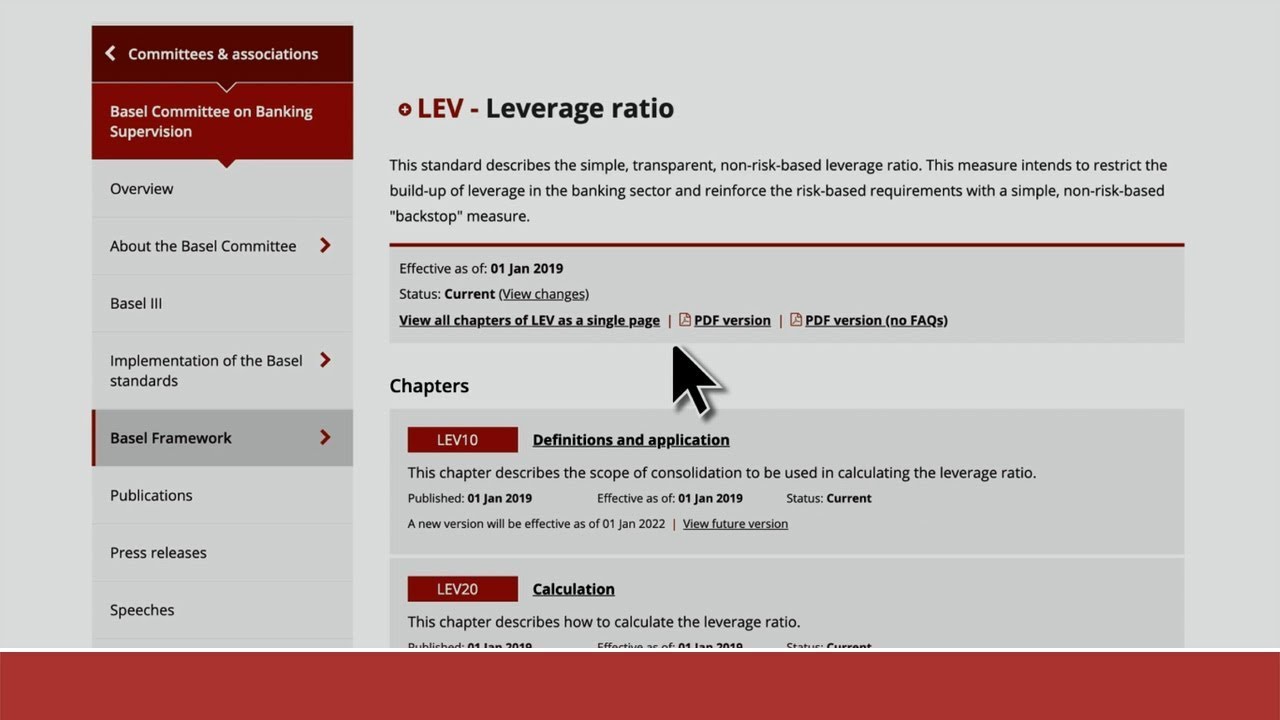
This standard describes the simple, transparent, non-risk-based leverage ratio. This measure intends to restrict the build-up of leverage in the banking sector and reinforce the risk-based requirements with a simple, non-risk-based "backstop" measure.
This standard describes the Liquidity Coverage Ratio, a measure which promotes the short-term resilience of a bank's liquidity risk profile.
The net stable funding ratio requires banks to maintain a stable funding profile in relation to the composition of their assets and off-balance-sheet activities.
Large exposures regulation limits the maximum loss that a bank could face in the event of a sudden counterparty failure to a level that does not endanger the bank's solvency. This standard requires banks to measure their exposures to a single counterparty or a group of connected counterparties and limit the size of large exposures in relation to their capital.
This standard establishes minimum standards for margin requirements for non-centrally cleared derivatives. Such requirements reduce systemic risk with respect to non-standardised derivatives by reducing contagion and spillover risks and promoting central clearing.
The Pillar 2 supervisory review process ensures that banks have adequate capital and liquidity to support all the risks in their business, especially with respect to risks not fully captured by the Pillar 1 process, and encourages good risk management.
This standard sets out disclosure requirements, which aim to encourage market discipline.
The Basel Core Principles provide a comprehensive standard for establishing a sound foundation for the regulation, supervision, governance and risk management of the banking sector.