BIS Historical Archive
The archives of the BIS enjoy special protection under the Bank's Headquarters Agreement (Art 3, 2). In the interest of openness and academic research, the Bank voluntarily decided to open its historical archive to the public in 1997.
The physical archive collections are open for consultation onsite; digitised and digital-born files can be made available online. In addition, the BIS Historical Archive possesses a small photo collection.
Please be aware that the BIS Historical Archive will be exceptionally closed to external researchers from 18 September 2026 until at least 15 January 2027 as we are assessing the need and scope for reorganising and digitising our collections.
Open archive rules
Under the BIS open archive rules, all records relating to the Bank's business and operational activities which are over 30 years old are available for consultation, with the exception of a limited number of records that remain private or confidential even after 30 years have elapsed.
It is within the BIS's discretion to determine which records will not be released for public consultation. Any such decision will normally be based on the principle of protection of personal privacy and of legitimate third-party interests. All files open for consultation are listed in the BIS Archive catalogue.
The records of the BIS are organised in seven groups, largely reflecting the BIS's organisational structure:
- Organisation and Management of the BIS
- Banking
- Monetary and Economic Department
- Accounting and loans
- Establishment - building, security, HR policies, IT systems etc (this record group is not open to the public)
- Finance and economics
- History
The record groups consist largely of various types of correspondence, internal communication and reports. Important collections include files on:
- Reparations Office: secretariat files and a documentation library originating from the Berlin Reparations Office (Agent General for Reparations Parker Gilbert). These files were taken over by the BIS upon the dissolution of the Reparations Office in 1930. They document the administration of reparations during the 1920s, a function taken over by the BIS and performed until the suspension of reparations by the Lausanne Agreement (1932).
- The administration of international loans issued in connection with the Dawes and Young Plans (Dawes and Young Loans).
- The operation of the European Payments Union and the European Monetary Agreement from the late 1940s onward.
- International credit facilities in the granting of which the BIS has been involved.
- Expert meetings and conferences organised by the BIS or in which the BIS participated.
- Papers of senior managers and of the first Presidents, as well as microfilms of a selection of T H McKittrick's papers from the Baker Library, Harvard University.
- Banking customer files, documenting the banking policy between the BIS and its institutional counterparties (central banks and international organisations).
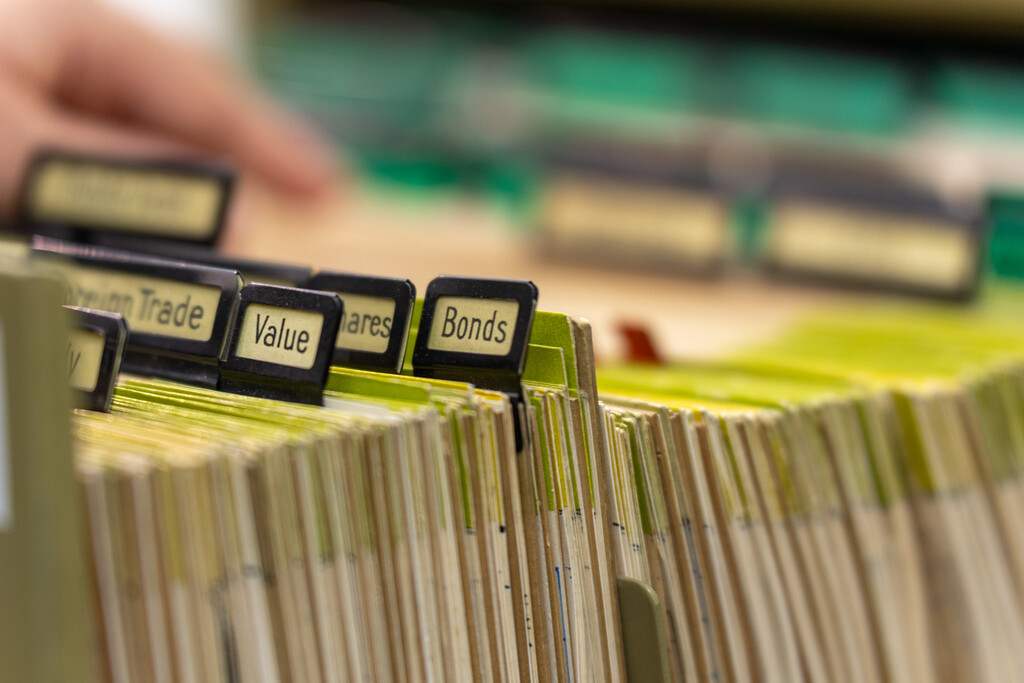
Applying for access to the archives
The BIS Archive is located in the BIS Tower at Centralbahnplatz 2, Basel, and is open to researchers by appointment only. Opening times are normally Monday to Friday 09:00 to 12:30 and 14:00 to 17:30. The Archive is closed on Swiss public holidays, BIS Board meeting days and the day of the Annual General Meeting.
Please contact the BIS Archive at:
Email: archive@bis.org
BIS Archive
Bank for International Settlements
CH-4002 Basel
State your research interest and provide the name, address, telephone number and e-mail address of two referees who can vouch for your suitability to use the Archive. If you are a student, one of your referees should be your thesis or dissertation supervisor, or personal tutor. Also please include your home address (not professional address or post office box), to which your letter of invitation will be sent.
Researchers will be sent a letter of invitation, which they must bring with them at the time of their visit, as well as valid identification bearing a photograph. A maximum of two researchers are granted access at any one time, as long as they are working jointly on a project. Researchers are permitted to use their own laptop and can bring a camera to take pictures of archival documents where this is permitted.