The story of the BIS
Established in 1930, the Bank for International Settlements is the oldest international financial institution. From its inception to the present day, the BIS has played a number of key roles in the global economy, from settling reparation payments imposed on Germany following the First World War, to serving central banks in their pursuit of monetary and financial stability.
On 17 May 2020, the BIS marked 90 years since it first opened its doors for business. The book Promoting global monetary and financial stability: the Bank for International Settlements after Bretton Woods, 1973-2020 (Cambridge University Press), reviews the Bank's role and contributions over the past 50 years.
BIS foundation and crisis (1930-1939)
The BIS was created in 1930 at the Hague Conference. A convention respecting the establishment of the BIS was signed between Belgium, France, Germany, Italy, Japan and the United Kingdom on the one hand and Switzerland on the other.
The BIS was created in the context of the Young Plan, adopted on 20 January 1930 at the Hague Conference. A convention respecting the establishment of the BIS in Switzerland was signed on the same date between the governments of Belgium, France, Germany, Italy, Japan and the United Kingdom on the one hand and Switzerland on the other.
The Young Plan was intended to settle once and for all the question of reparation payments imposed on Germany (and to a lesser extent on other central European countries) by the Treaty of Versailles following the First World War. The BIS was set up to take over the functions previously performed by the Agent General for Reparations: managing the collection, administration and distribution of the annuities payable as reparations. The Bank's name is derived from this original role.
In addition, the BIS was appointed agent to the trustees and trustee, respectively, for the German government international loans of 1924 and 1930 (the so-called Dawes and Young Loans issued to help finance reparations). In execution of the Young Plan, the BIS reinvested part of the Young Loan proceeds in German bonds.
Finally, the BIS was tasked to promote central bank cooperation more generally.
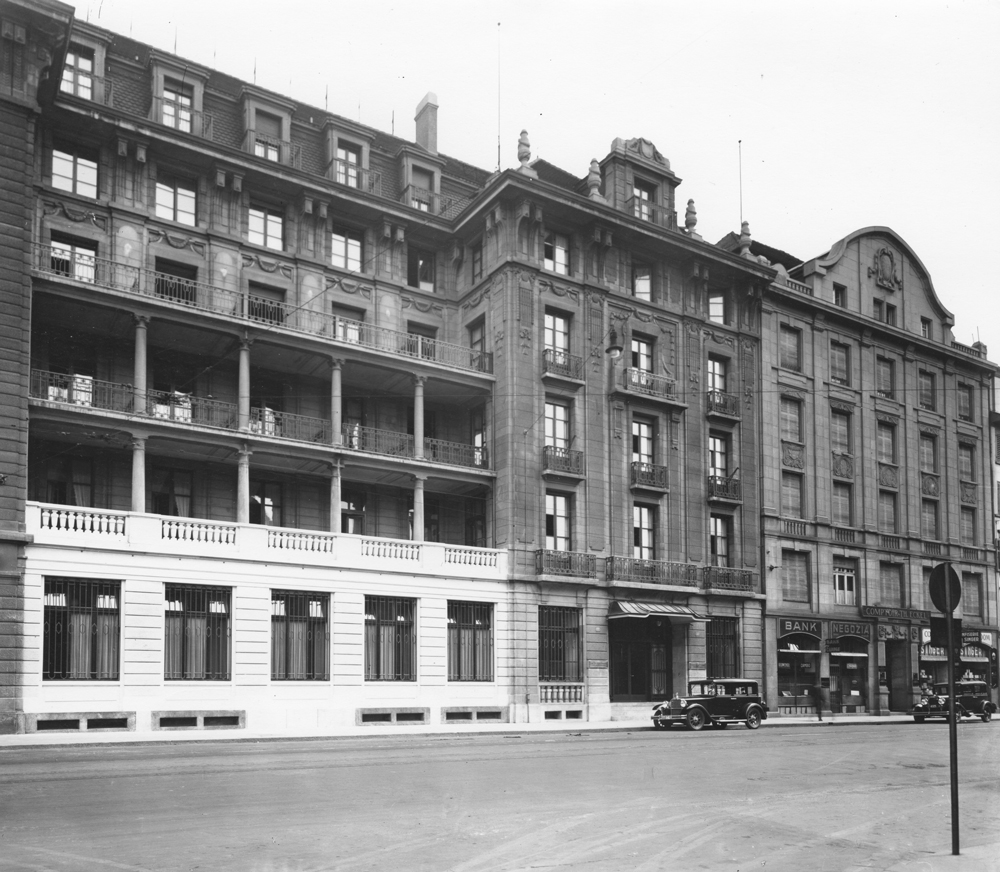
First building of the BIS (1930-77): the former Hotel Savoy-Univers at Centralbahnstrasse 7 in Basel, Switzerland. © BIS Historical Archive
As a consequence of the Great Depression of the 1930s, the reparations issue quickly faded. The German financial and banking crisis of the summer of 1931 led first to a one-year moratorium on reparation payments (Hoover Moratorium of July 1931) and subsequently to their complete cancellation (Lausanne Agreement of July 1932).
With the reparations issue out of the way, the BIS focused its activities on the technical cooperation between central banks (including reserve management, foreign exchange transactions, international postal payments, gold deposit and swap facilities) and on providing a forum for regular meetings of central bank Governors and officials.
Of these meetings, the regular Board meeting weekends, which brought together the Governors of the main member central banks, were the most important (in the 1930s, the BIS Board consisted of the Governors and their alternates of the National Bank of Belgium, the Bank of France, the German Reichsbank, the Bank of Italy, the Netherlands Bank, the Swedish Riksbank, the Swiss National Bank and the Bank of England, as well as representatives for the Bank of Japan).
From early on, the BIS developed its own research in central banking and finance under the dynamic guidance of its first Economic Adviser, the Swede Per Jacobsson (1894-1963), and started collecting financial and banking statistics. The BIS research found its way into the Bank's Annual Report, which soon established itself as a leading publication in its field.
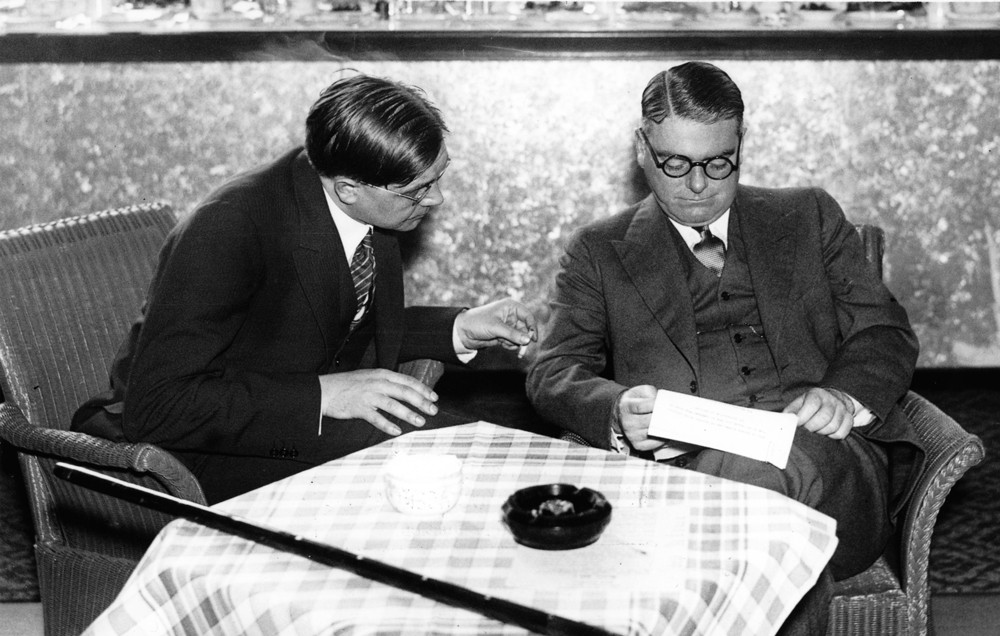
BIS Economic Adviser Per Jacobsson (left) and BIS President Leon Fraser at the World Monetary and Economic Conference, London (June-July 1933). © Basel University Archive
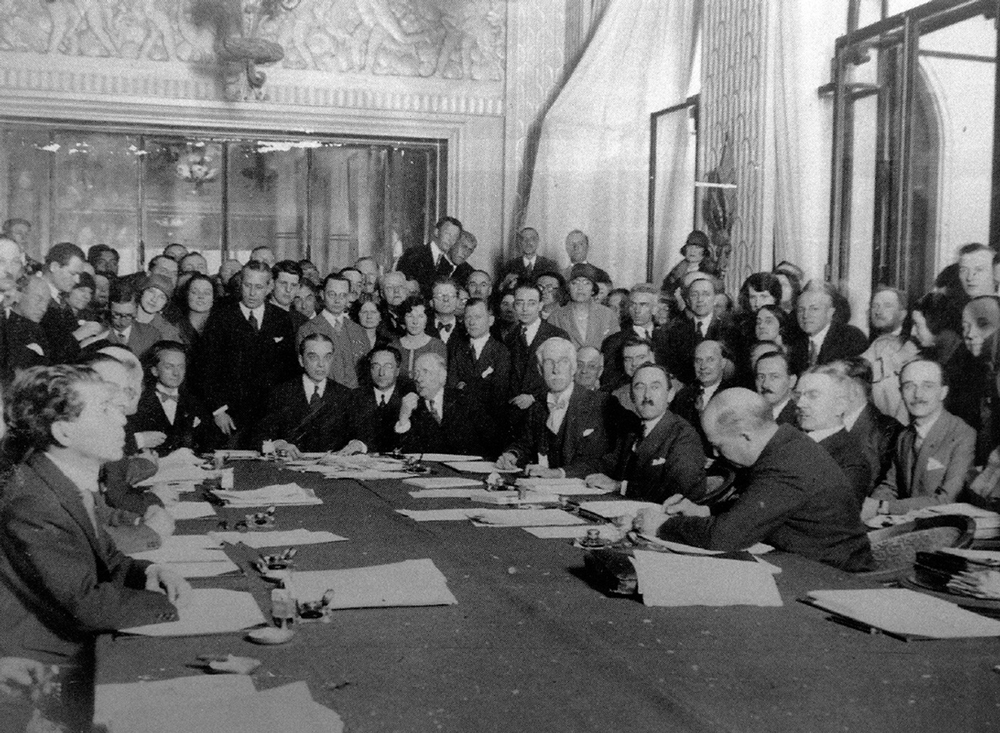
Session of the 1929/30 Hague Conference at which the Young Plan was adopted. © Keystone
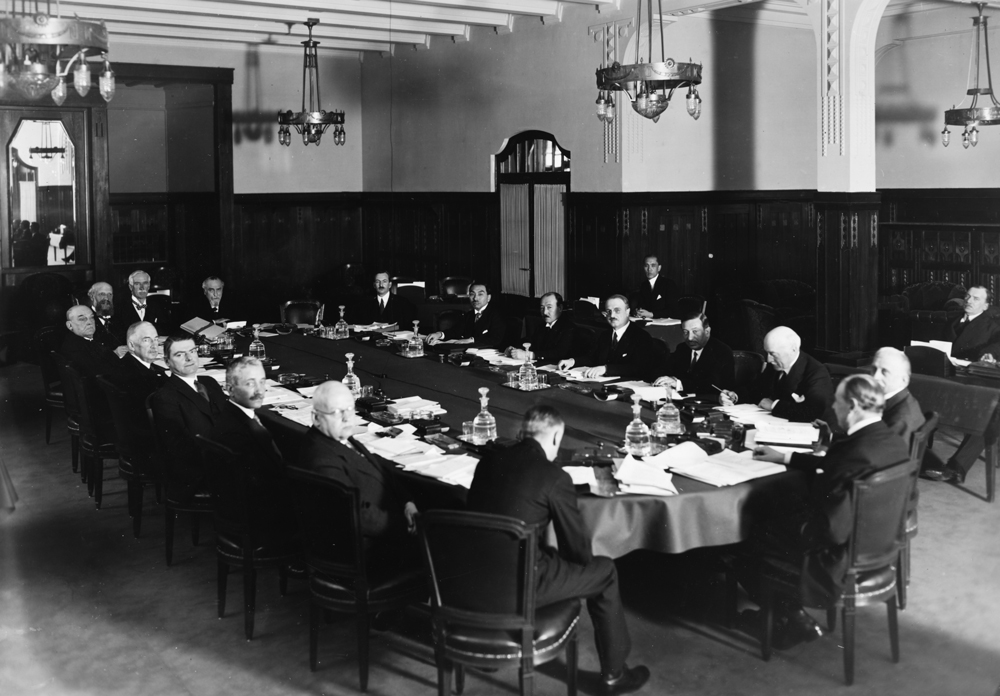
First unofficial meeting of the BIS Board of Directors in Basel, April 1930. © BIS Historical Archive
The BIS during the Second World War (1939-1948)
In the late 1930s, international cooperation became difficult due to growing political and military tensions. During this period, the BIS was instrumental in shipping gold from Europe to the safety of New York, mostly on behalf of European central banks.
In the late 1930s, effective international cooperation became more difficult because of the growing political and military tensions. During this period, the BIS was instrumental in shipping gold from Europe to the safety of New York, mostly on behalf of European central banks (more than 140 tonnes of gold were transported between June 1938 and June 1940).
With the declaration of war between Germany on the one hand and France and the United Kingdom on the other in September 1939, it was no longer possible for representatives of these belligerent countries to attend BIS meetings. Board members were nevertheless convinced that the BIS ought to be kept alive to assist in financial and monetary reconstruction after the war. The last prewar meeting of the Board of Directors took place in Basel in June 1939. After that further Board meetings were suspended for the duration of the war.
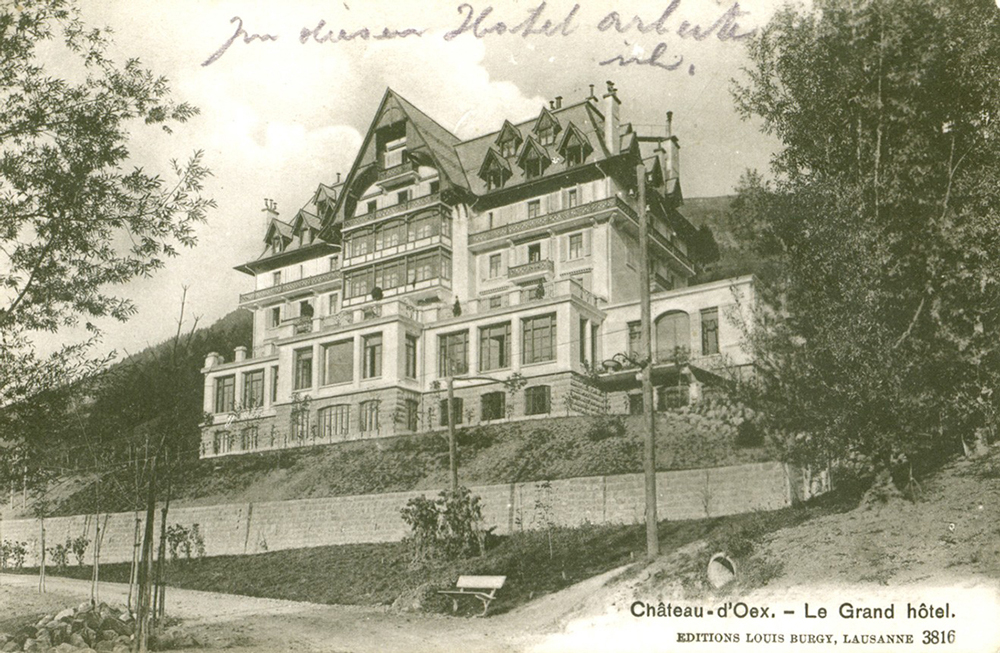
The former Grand Hotel in Château d'Oex, Switzerland. From May to October 1940, the BIS temporarily relocated to this hotel, in line with the Swiss authorities' plan to evacuate the exposed border regions in case of an armed conflict. © BIS Historical Archive
The BIS adopted a neutrality declaration excluding banking operations that might benefit one belligerent party to the detriment of another, but decided to maintain its banking services to assist central banks and to fulfil the Bank's own obligations so far as was consistent with neutrality. The Bank's precarious position - having on its Board central bank representatives of countries that were at war with one another as well as of neutral countries, and being cut off from direct communications with many of its members - gave rise to a number of difficult decisions. The most controversial of these dated from before the war, when, in March 1939, the BIS decided to honour an order received from the Czechoslovak National Bank to transfer part of its gold reserves held in a BIS account at the Bank of England in London to a German Reichsbank account. The transfer order had been issued days after German troops had occupied Prague - as it later transpired, under duress.
From 1940 onward, the volume of BIS banking operations declined rapidly. However, throughout the war, the BIS continued to receive interest payments from the German Reichsbank in respect of the investments the BIS had made in German bonds back in 1930-31. The largest part of these interest payments were made in gold.
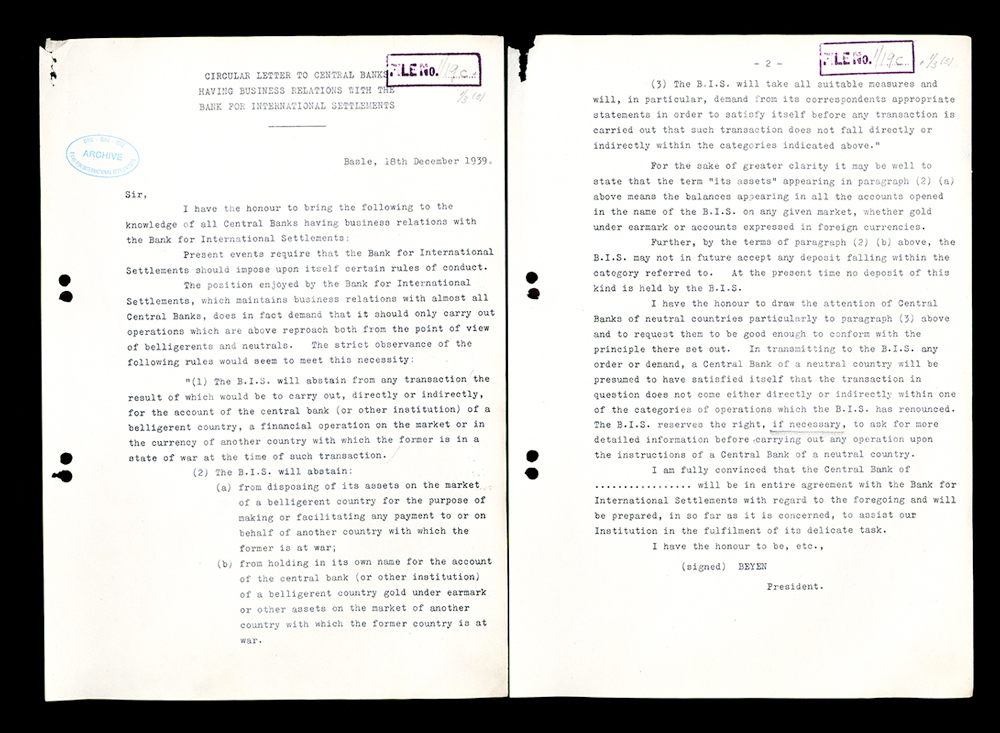
In December 1939, the BIS circulated to its member central banks a declaration of neutral conduct for the duration of the war. © BIS Historical Archive
Investigations after the war revealed that the Reichsbank had used large quantities of gold stolen from central banks in the occupied territories to make wartime payments to a number of institutions including the Swiss National Bank and the BIS. This gold had been remelted at the Prussian mint to conceal its origin. In this manner, during the war, the BIS received 3.7 tonnes of gold from the Reichsbank which, it emerged from German records captured after the war, had originally been looted from the central banks of Belgium and the Netherlands. The BIS cooperated fully with the postwar investigations led by the Allied Tripartite Commission for the Restitution of Monetary Gold and returned 3.7 tonnes of gold to the Commission in 1948.
In July 1944, a United Nations conference met at Bretton Woods in the United States to discuss the postwar international monetary system. The Bretton Woods Conference adopted a resolution calling for the abolition of the BIS "at the earliest possible moment", because it considered that the BIS would have no useful role to play once the newly created World Bank and International Monetary Fund were operational. European central bankers held a different opinion, and successfully lobbied for maintaining the BIS. By early 1948, the BIS liquidation resolution had been put aside. It was understood that henceforth the BIS would focus foremost on European monetary and financial matters.
The BIS as a forum for European monetary cooperation (1947-93)
In the aftermath of World War II, Europe's priority was stabilising the different national currencies before trade and foreign exchange restrictions could be gradually lifted. The European countries turned to the BIS to act as the technical agent for creating a European Payments Union.
Restoring multilateral payments and currency convertibility in Europe
Regular BIS Board meetings resumed in December 1946. In the aftermath of World War II, Europe's priority was stabilising the different national currencies before trade and foreign exchange restrictions could be gradually lifted.
When the Benelux countries, France and Italy concluded a first Agreement on Multilateral Monetary Compensation in November 1947, they turned to the BIS to act as the technical agent for this scheme. In September 1950, 18 European countries set up a European Payments Union (EPU) and appointed the BIS as its agent.
The goal of the EPU was to restore the free convertibility of European currencies in line with the Bretton Woods agreements. To achieve this, each country reported its bilateral trade deficits or surpluses with each of the other participating countries to the BIS on a monthly basis. The BIS then calculated the aggregate deficit or surplus of each country vis-à-vis the EPU as a whole. Initially, these deficits and surpluses did not have to be settled immediately, but were instead largely converted into debits and credits vis-à-vis the EPU. In that way, intra-European multilateral trade could be restored without putting undue pressure on the participating countries' currency positions and reserves. With time, the ratio of debits and credits granted by the EPU was gradually reduced. By the end of 1958, the EPU's goal was reached: European currencies achieved full current account convertibility, and the Union was dissolved.
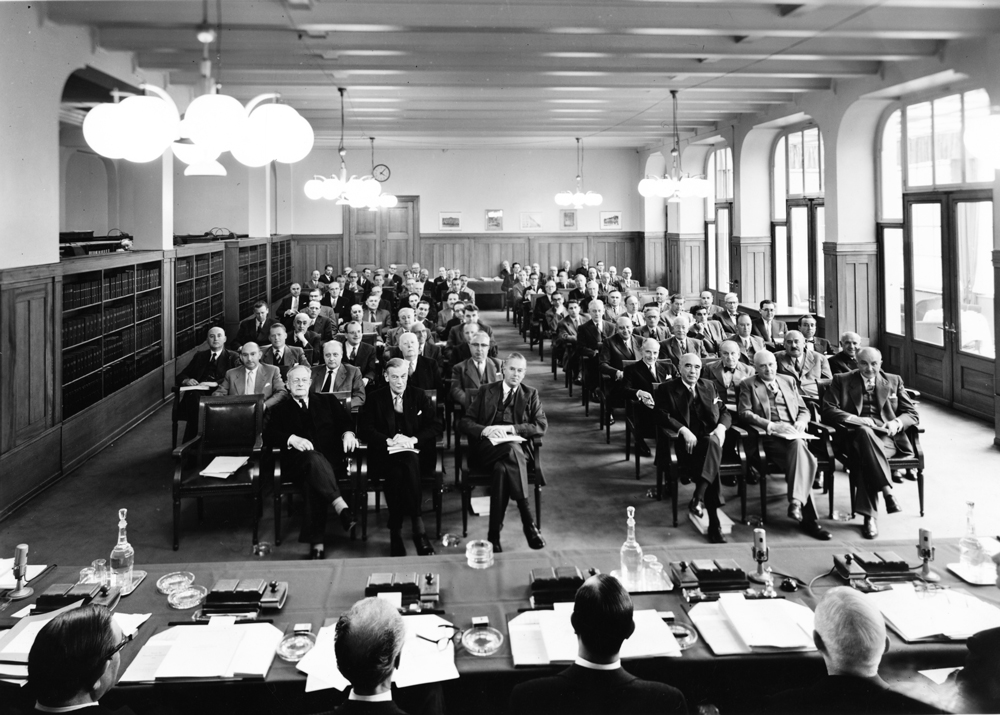
BIS Annual General Meeting, 1955, Basel. © BIS Historical Archive
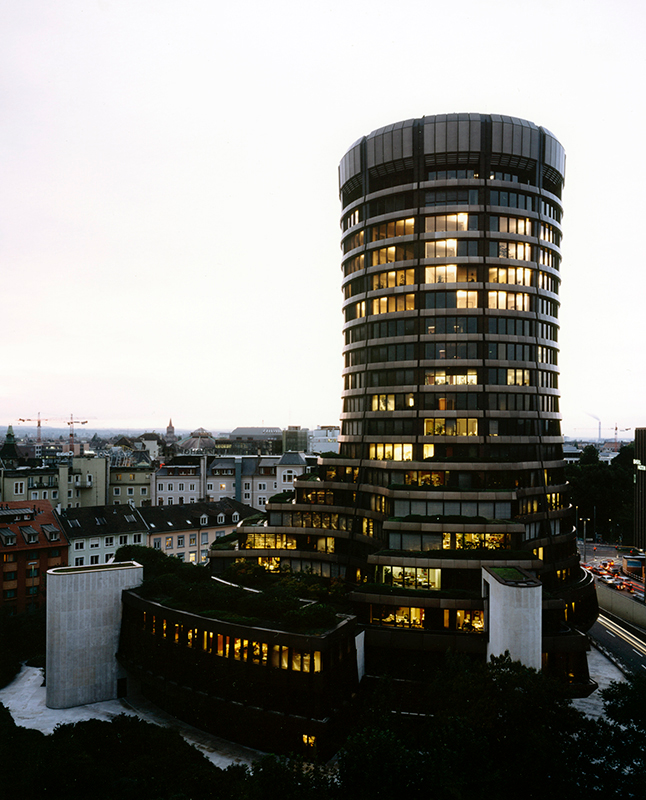
In 1977, the BIS moved to the newly constructed Tower in Basel. © BIS Historical Archive
In the 1960s, the BIS became involved in an entirely new chapter in European monetary cooperation. The 1958 Treaty of Rome, which created the European Economic Community (EEC), had called for closer coordination of monetary policies between the EEC member states. This was followed in 1964 by an EEC Council decision to create the Committee of the Governors of the Central Banks of the Member States of the European Economic Community ("Committee of Governors"). While the EEC Commission had wanted to see this committee based in Brussels, the Governors decided that it should meet at the BIS in Basel, as they were already meeting there regularly for the BIS Board meetings.
From 1964 until its dissolution at the end of 1993, the Committee of Governors met at the BIS, which also provided its secretariat (see: Making the European Monetary Union — Harvard University Press). The European Monetary Cooperation Fund (1973) and the European Monetary System (1979) were operated from Basel, with the BIS providing the necessary technical support. In 1988-89 the Committee for the Study of Economic and Monetary Union, chaired by European Commission President Jacques Delors, convened in Basel and laid the technical groundwork for the European Council's decision to move towards full European monetary union, as approved by the 1992 Treaty of Maastricht.
With the implementation of the first phase of monetary union at the end of 1993, the Committee of Governors was replaced by the European Monetary Institute (EMI), which then moved from Basel to Frankfurt. In 1997, the EMI became the European Central Bank.
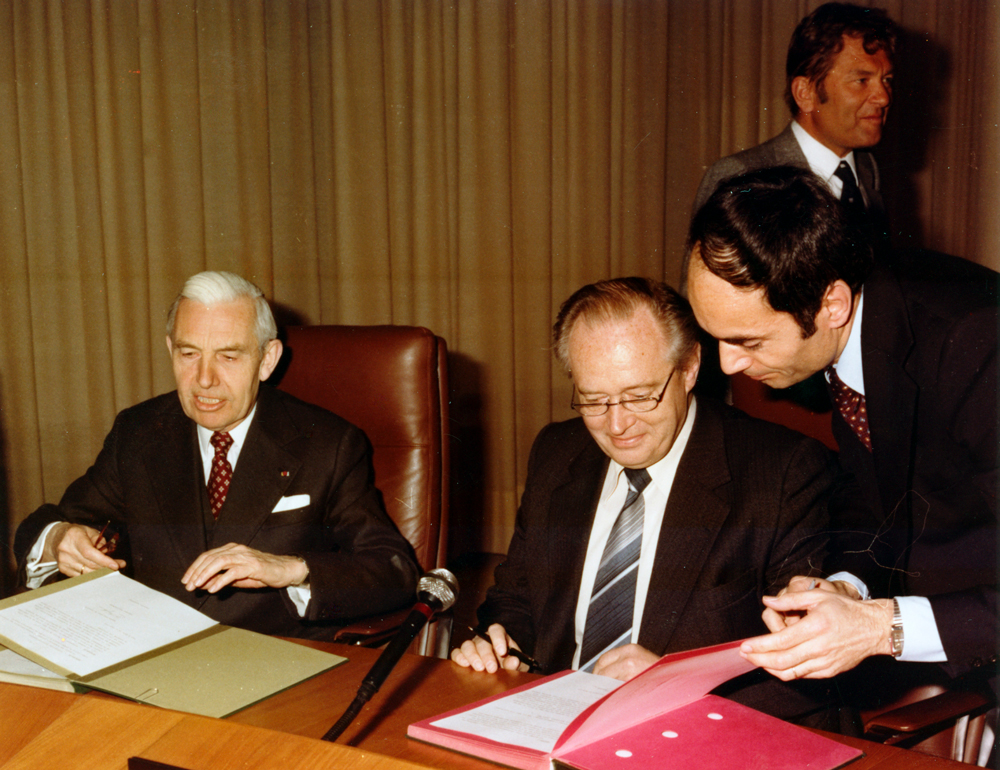
Signing of the agreement regarding the European Monetary System (EMS), 13 March 1979, Basel. © BIS Historical Archive
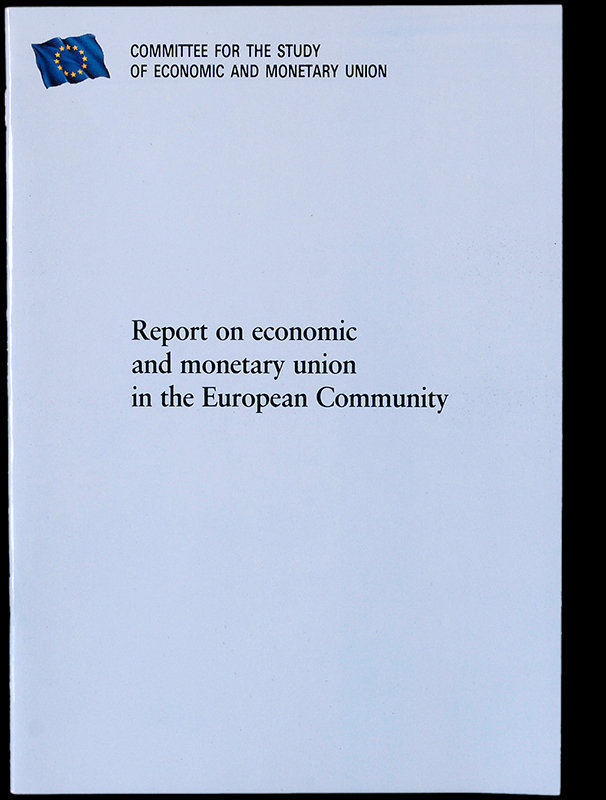
Cover of the Delors Report, 1989. © BIS Historical Archive
The BIS going global (1961 onwards)
The success of the European Payments Union in restoring currency convertibility in Europe in 1958 meant that the Bretton Woods system was finally operational throughout the western world. A good deal of international cooperation was required to keep this system running smoothly.
The success of the European Payments Union in restoring currency convertibility in Europe in 1958 meant that the Bretton Woods system of freely convertible currencies at fixed exchange rates (based on the US dollar and gold) was finally operational throughout the western world. This system was supposed to be largely self-adjusting, with the IMF playing a global supporting and coordinating role. Nevertheless, a good deal of international cooperation was required to keep the Bretton Woods system running smoothly.
The BIS played an important part in coordinating the response of the central banks to this challenge, mostly within the framework of the Group of Ten (G10, consisting of Belgium, Canada, France, Germany, Italy, Japan, the Netherlands, Sweden, the United Kingdom and the United States, plus Switzerland as an associated member). From 1961, initiatives taken by the G10 central banks included the creation of a common Gold Pool to intervene in the private gold market (1961-68), the creation of a central banks' currency swaps network, and repeated joint currency support arrangements (for example, to shore up the pound sterling and the French franc). These measures helped to prolong the lifespan of the Bretton Woods system during a period of unprecedented economic growth (the "golden sixties"), but could not prevent its eventual demise. By the early 1970s, the value of the US dollar was in effect determined by the markets, marking the end of the fixed exchange rate regime and inaugurating the era of floating currencies.
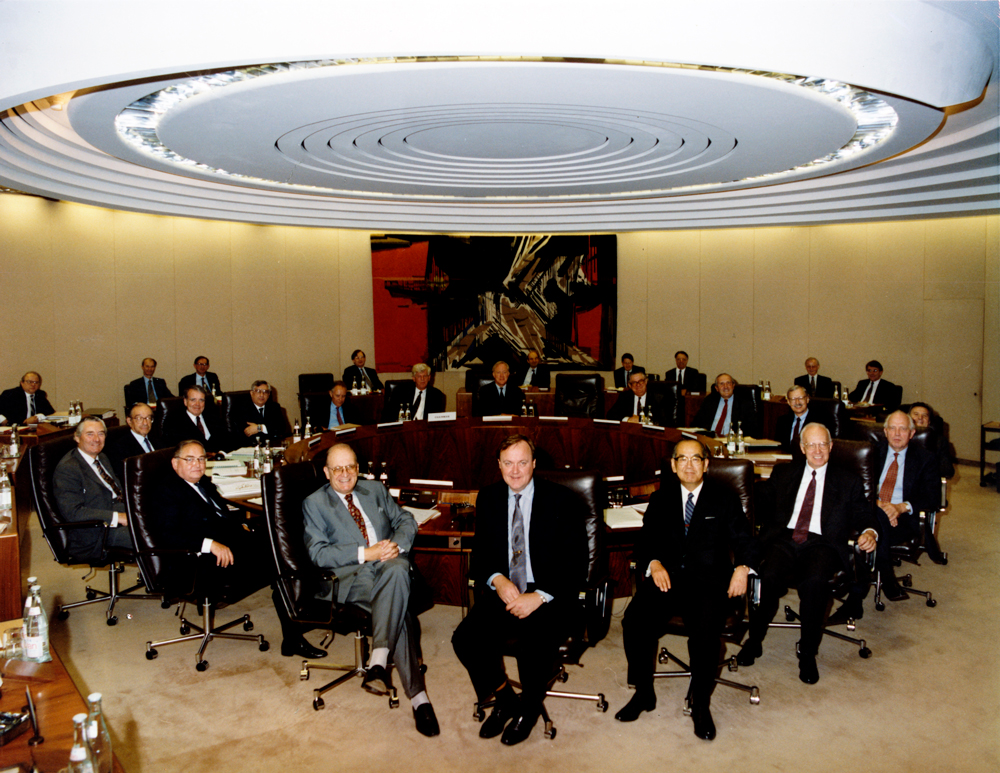
BIS Board of Directors, meeting of 13 September 1994: the first Board meeting in which the Federal Reserve Board, the Federal Reserve Bank of New York, the Bank of Japan and the Bank of Canada were represented - and the first, important step towards a truly global BIS. © BIS Historical Archive
The 1970s were characterised not only by floating exchange rates and high inflation, but also by the rapid growth of international financial markets and of cross-border money flows. As a result, financial stability issues came once again to the fore.
In 1974, the collapse of Bankhaus Herstatt in Germany and of Franklin National Bank in the United States highlighted the lack of efficient banking supervision of banks' international activities, and prompted the G10 central bank Governors to create the Basel Committee on Banking Supervision. The Latin American debt crisis of 1982 highlighted the danger of undercapitalised banks being over-exposed to sovereign risk.
In 1988, the Basel Committee issued the Basel Capital Accord, introducing a credit risk measurement framework for internationally active banks that became a globally accepted standard. This Capital Accord has since been further refined in the Basel II (2004) and Basel III (2017) frameworks. Such standards aim to achieve a better and more transparent measurement of the various risks incurred by internationally active banks, limiting the possibility of contagion in case of a crisis and strengthening the global financial system overall.
Besides the Basel Committee, other BIS-based committees that have helped to promote monetary and financial stability are: the Markets Committee (since 1964), the Committee on the Global Financial System (CGFS, since 1971) and the Committee on Payment and Market Infrastructures (CPMI, since 1990).
With its economic, monetary and financial research, the BIS has continued to support the work of the Basel-based committees and of the central bank community more generally. The BIS has also developed into a hub for sharing statistical information among central banks, and for publishing statistics on global banking, securities, foreign exchange and derivatives markets. In 1999, the Financial Stability Institute (FSI) was created to promote dissemination of the work undertaken by the supervisory community, and to provide practical training to financial sector supervisors worldwide.
Given the BIS's increasingly global role since the 1960s, which was also reflected in the expansion of its banking business undertaken on behalf of a growing number of central banks, it had become clear by the early 1990s that the Bank's outreach and governance model had to evolve accordingly. From 1994 onward, membership of the BIS and of its Board of Directors was expanded in stages with the aim to include all systemically important emerging market economies. Private shareholding, a remnant from the BIS's foundation, was discontinued in 2001, with BIS shares being exclusively reserved for central banks. At the end of 2020, 63 central banks worldwide were shareholding members of the BIS.
As an expression of its commitment to fostering global monetary and financial stability, the BIS has opened Representative Offices for Asia and the Pacific in Hong Kong SAR (1998) and for the Americas in Mexico City (2002).
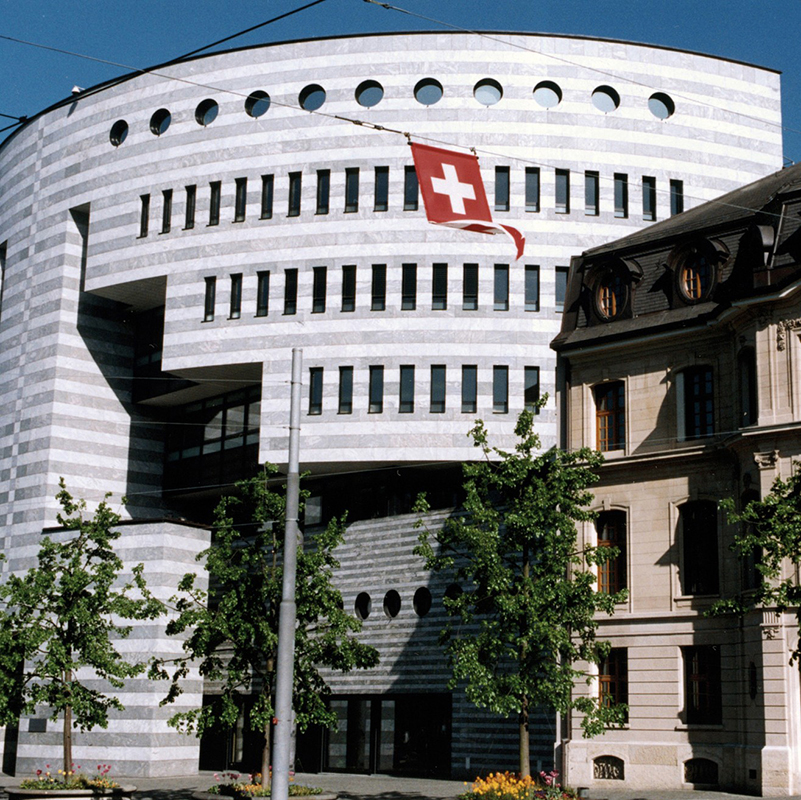
In 1998 the BIS acquired the Mario Botta-designed building located in Aeschenplatz in Basel, to house its Banking and IT departments. Today the building is also home to the BIS's Risk Management and Finance units. © BIS Historical Archive
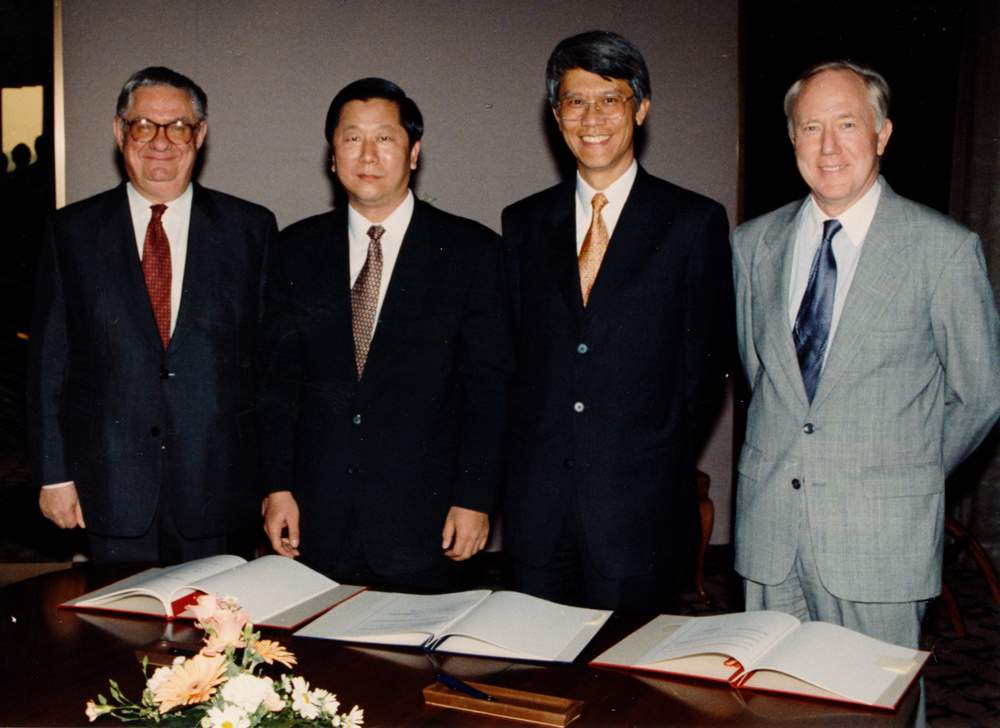
Signing ceremony of the agreement establishing the BIS Representative Office for Asia and the Pacific in Hong Kong SAR, 1998. From left to right: Alfons Verplaetse (BIS President), Dai Xiaglong (People's Bank of China), Joseph Yam (Chief Executive of the Hong Kong Monetary Authority), Andrew Crockett (BIS General Manager). © BIS Historical Archive
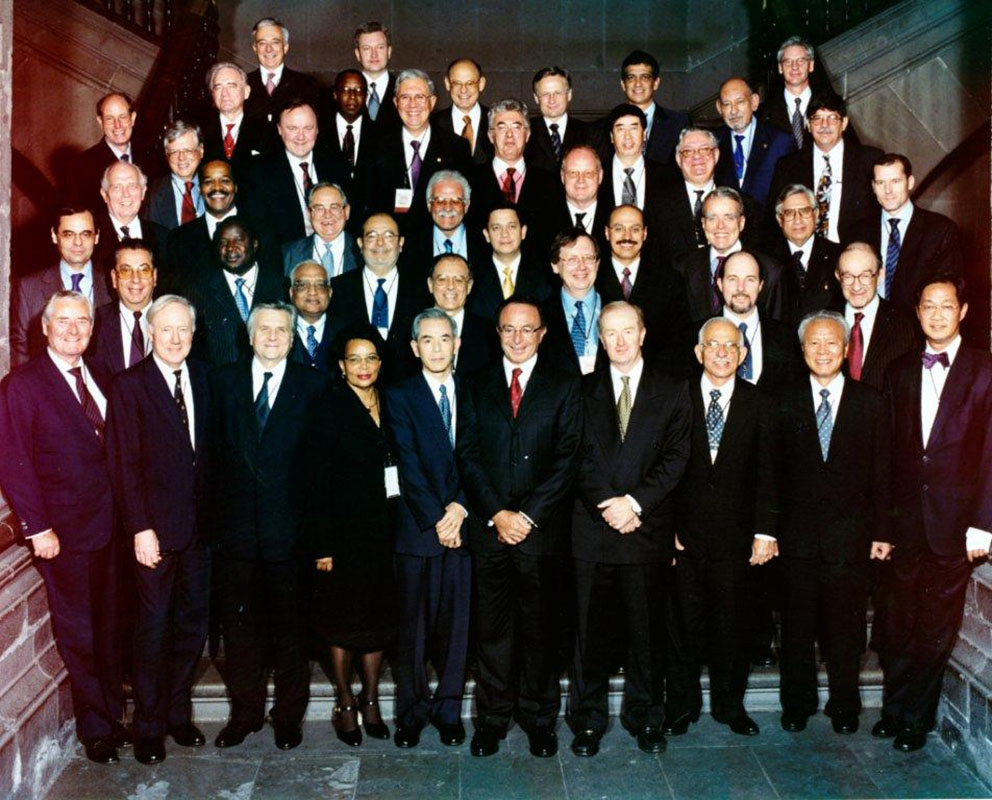
The November 2002 BIS Board meeting was held in Mexico City to mark the opening of the BIS Representative Office for the Americas there. © BIS Historical Archive
The BIS in the new financial architecture (1997 onwards)
The 1997 Asian financial crisis and 1998 Russian financial crisis prompted further rethinking of the global financial architecture. In February 1999, the Financial Stability Forum was created - which became the Financial Stability Board in 2009 - to coordinate the work of national financial authorities and international standard-setting bodies.
Transforming the governance structure of the international financial system
The 1997 Asian financial crisis and 1998 Russian financial crisis prompted further rethinking of the global financial architecture. In February 1999, the G7 Finance Ministers and Central Bank Governors created the Financial Stability Forum (FSF) - which became the Financial Stability Board (FSB) in 2009 - to coordinate at the international level the work of national financial authorities and international standard-setting bodies, and to develop and promote the implementation of effective regulatory, supervisory and other financial sector policies in the interest of financial stability. BIS General Manager Andrew Crockett was appointed the first Chairperson of the FSF in a personal capacity (1999-2003) and the FSF's secretariat was based at the BIS in Basel.
The outbreak of the global financial and banking crisis in 2007-08 accelerated the transformation of the governance structure of the international financial system. As a result, the G10, long the main organisational grouping in international financial policymaking (including at the BIS), was superseded by the G20 grouping of major advanced and emerging market economies. At the same time, the work carried out by the BIS, the IMF, the OECD and other organisations has become more integrated, not least thanks to the efforts of the FSB. Since the 1990s, the committees that meet at the BIS and the secretariats it hosts have all gone through this process of widening their membership and strengthening their cooperation with other international bodies and organisations, to remain globally representative.
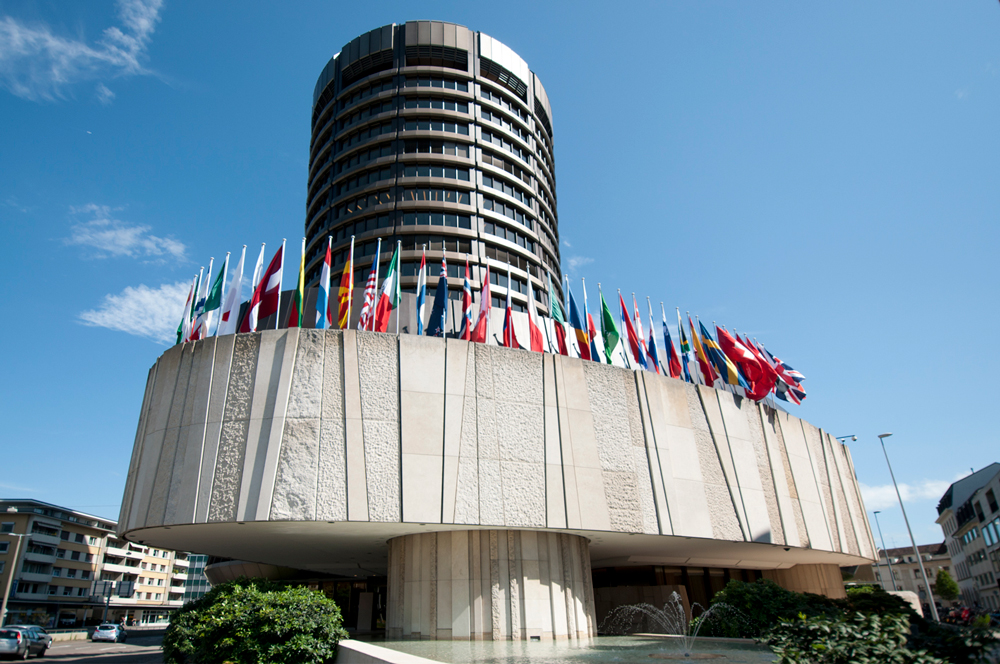
Today the BIS is owned by 63 member central banks, representing countries from around the world that together make up about 95% of world GDP. Its mission is to serve central banks in their pursuit of monetary and financial stability, to foster international cooperation in those areas and to act as a bank for central banks.
A heightened emphasis on financial stability
The crisis that started in 2007-08 has had a major influence on BIS research and on the work of the Basel-based committees and secretariats. Even before that, BIS economists had issued warnings about the dangerous build-up of imbalances in the global financial system. The crisis has led to renewed and heightened emphasis on financial stability issues, particularly the need for a macroprudential approach to financial stability. The work of the Basel-based committees - the BCBS, CGFS, CPMI and Markets Committee - has been shaped by the need to address these challenges and has expanded accordingly.
Another focus has been on providing more timely and more relevant financial statistics. The BIS banking statistics have long provided a unique means of assessing key vulnerabilities. As part of continuous enhancement efforts, a central data hub was established at the BIS in 2012 to provide national supervisory authorities with improved data on the credit exposures of global systemically important banks.
In the late 2010s, the emerging revolution in financial technology (fintech) and later in information technology generally (Artificial Intelligence) prompted the BIS to create the BIS Innovation Hub to foster international collaboration in these fields within the central banking community.
Through these initiatives, the BIS aims to remain true to its historical and present mission, which is to serve the global central bank community, to foster cooperation between central banks and to promote monetary and financial stability.