Overview
Sixty-three central banks and monetary authorities are currently members of the BIS. The BIS has four main departments. They encompass economic research, banking activities, support to central bank collaboration on technological developments impacting the financial system, and general internal support.
The Board determines the Bank's strategic and policy direction, supervises BIS Management and fulfils specific tasks as set out in the Bank's Statutes. The management of the Bank is directed by the General Manager, who is responsible to the Board of Directors for the conduct of the Bank. The General Manager is assisted by the Deputy General Manager and advised by the Executive Committee.
Governance
The governance of the Bank is exercised at three levels – the Board of Directors, the General Meetings of member central banks and BIS Management – as determined by its Statutes.
The BIS hosts six committees, which are overseen by three senior groupings in the context of the Basel Process.
- The Global Economy Meeting (GEM) provides oversight to three committees – the Committee on the Global Financial System, the BIS Committee on Payments and Market Infrastructures and the Markets Committee – by appointing their chairs, receiving their reports and deciding on publication, and providing guidance on work priorities. A smaller group of central bank Governors in the Economic Consultative Committee supports the GEM by preparing proposals for discussion and decision by the GEM.
- The All Governors' Meeting, which includes all 63 BIS member central banks, oversees the work of two committees – the Central Bank Governance Forum and the Irving Fisher Committee on Central Bank Statistics – whose memberships are broader than the GEM's.
- The Group of Governors and Heads of Supervision (GHOS) provides oversight to the Basel Committee on Banking Supervision (BCBS). The GHOS comprises the central bank Governors and non-central bank heads of supervision from BCBS member jurisdictions.
The BIS hosts three associations that also participate in the Basel Process: the Financial Stability Board, the International Association of Insurance Supervisors and the International Association of Deposit Insurers. Each has a separate legal identity and its own governance arrangement.

Organisation
The BIS has four main departments. The Banking Department and the Monetary and Economic Department (MED) encompass our two principal activities – banking and economic analysis. The BIS Innovation Hub supports central bank collaboration on new technology and the General Secretariat provides general internal support.
These departments are supported by the Legal Service and the Communications, Risk Management, Internal Audit and Compliance units. Working alongside the four main departments is the BIS's Financial Stability Institute, which supports the implementation of global regulatory standards and sound supervisory practices by central banks and financial sector regulatory and supervisory authorities worldwide.
The Monetary and Economic Department undertakes research and analysis to shape the understanding of policy issues concerning central banks, provides committee support and organises key meetings of senior central bankers and other officials in charge of financial stability.
The Banking Department provides a range of financial services to support central banks in the management of their foreign exchange and gold reserves and invests the BIS's own capital.
The BIS Innovation Hub identifies and develops in-depth insights into critical trends in financial technology of relevance to central banks, explores the development of public goods to enhance the functioning of the global financial system, and serves as a focal point for a network of central bank experts on innovation.
The General Secretariat provides the organisation with comprehensive corporate services in the areas of IT, human resources, finance, facilities management, security and meeting services.


Strategy
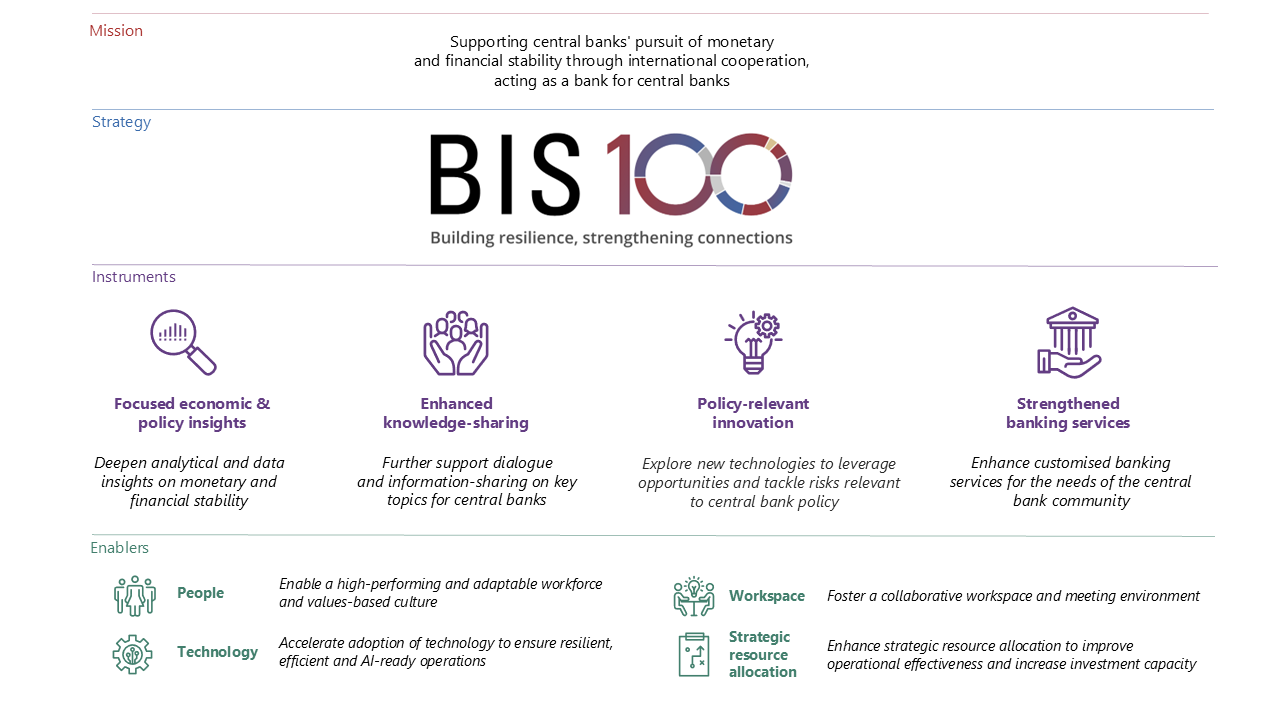
The BIS 100 strategy outlines our priorities and how we deliver on them.
The strategy has four key areas of focus:
- Focused economic and policy insights – deepening our analysis of monetary and financial stability issues. We will analyse and examine policy areas which affect the resilience of the financial system such as key shifts in global finance, the implications of new technologies and regulatory frameworks. We will also expand data collection and improve the accessibility and usability of statistics.
- Enhanced knowledge-sharing – further supporting dialogue among central banks on key topics. We will strengthen regional engagement, invest in strategic foresight capabilities and develop platforms to foster greater connections among our members.
- Policy-relevant innovation – exploring new technologies to leverage opportunities and tackle risks relevant to central bank policy. Projects will address emerging priorities for central banks, including artificial intelligence (AI), tokenisation and cyber resilience.
- Strengthened banking services – enhancing customised banking services to meet the needs of the central bank community. We will continue to diversify our client base, broaden access to trading venues and support central bank access to liquidity.
Strategic enablers within the BIS will support these activities.
For more information, please see the BIS Annual Report.
Staff and offices
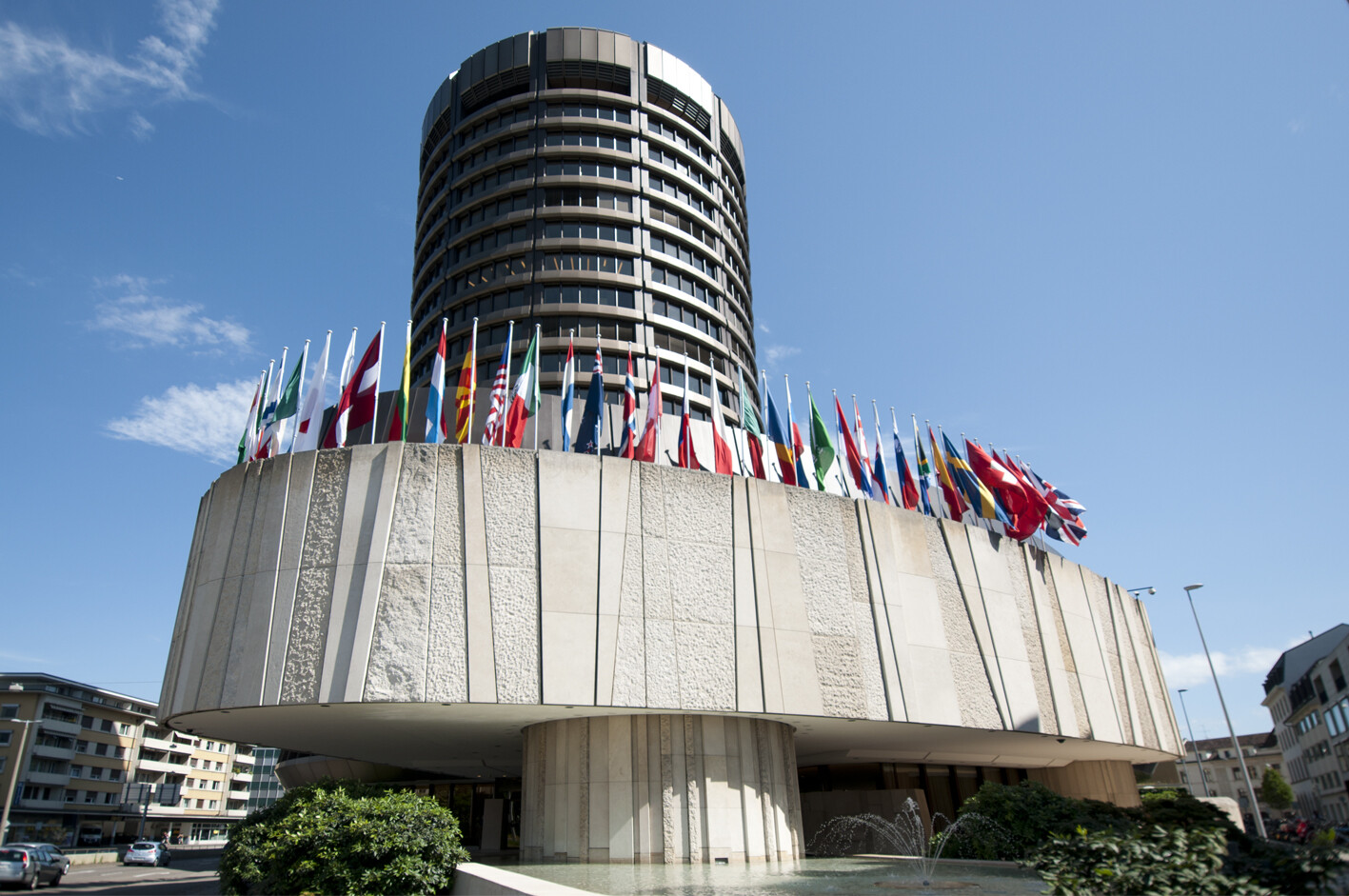
We currently employ about 600 staff members from more than 60 countries, most of whom work at our headquarters in Basel, Switzerland. We also have a network of Innovation Hub Centres around the world and two regional offices:
- Representative Office for Asia and the Pacific, Hong Kong SAR
- Representative Office for the Americas, Mexico City