
About the Summit
The BIS Innovation Summit is the annual flagship event of the BIS Innovation Hub, convening central bankers, regulators, technology leaders and academics to explore how innovation is reshaping the future of finance.
The BIS Innovation Summit brought together global policymakers, senior executives from the financial and technology industries, and academics to discuss how technological innovation's intensified speed is offering increasing opportunities to the financial sector and to central banks, and how central banks are dealing with the risks that technological innovations may create.
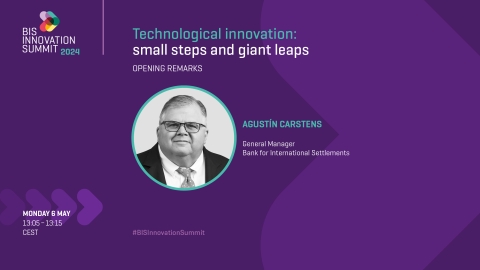
Opening remarks: Technological innovation: small steps and giant leaps
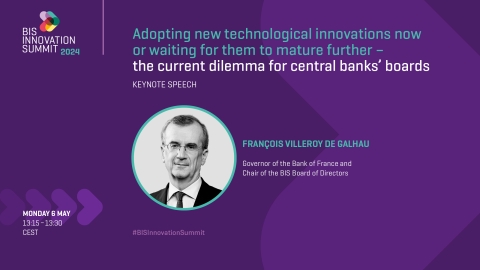
Keynote speech: Adopting new technological innovations now or waiting for them to mature further - the current dilemma for central banks’ boards
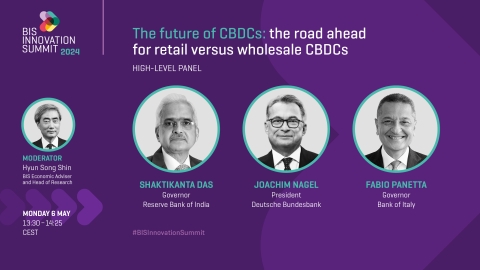
High-level panel: The future of CBDCs: the road ahead for retail versus wholesale CBDCs
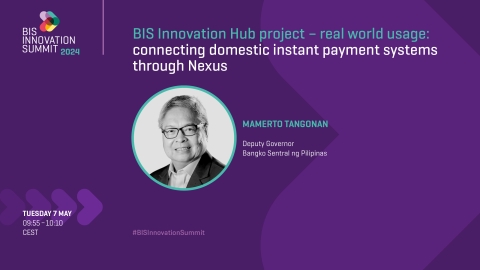
BIS Innovation Hub project - real world usage: connecting domestic instant payment systems through Nexus
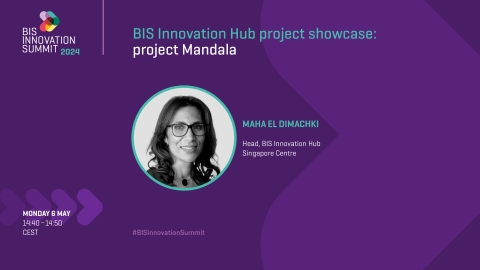
BIS Innovation Hub project showcase: project Mandala
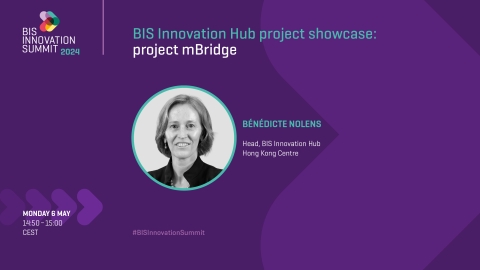
BIS Innovation Hub project showcase: project mBridge
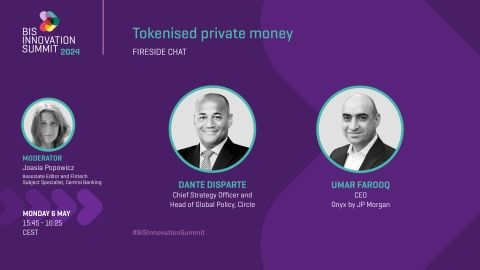
Fireside chat: Tokenised private money
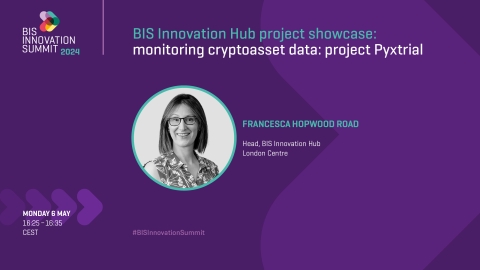
BIS Innovation Hub project showcase: monitoring cryptoasset data: project Pyxtrial
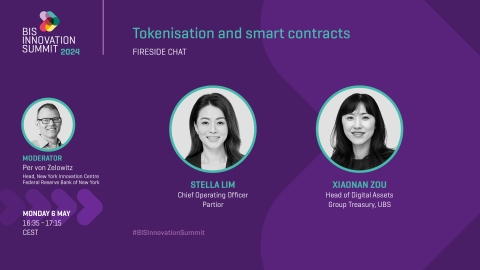
Fireside chat: Tokenisation and smart contracts

BIS Innovation Hub project showcase: project Agorá
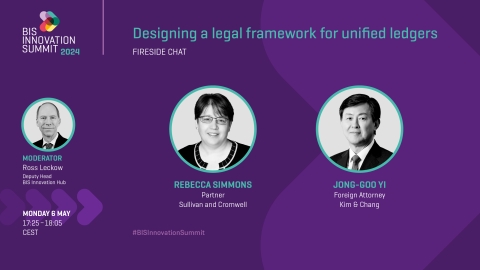
Fireside chat: Designing a legal framework for unified ledgers
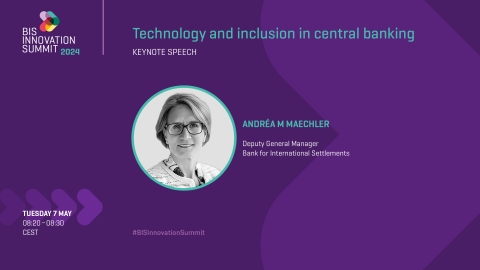
Keynote speech: Technology and inclusion in central banking
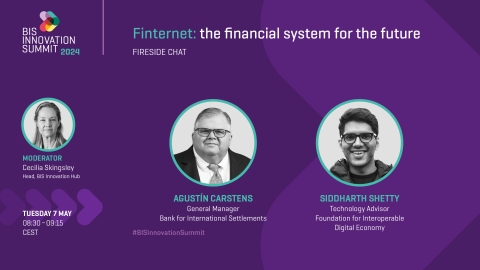
Fireside chat: Finternet: the financial system for the future
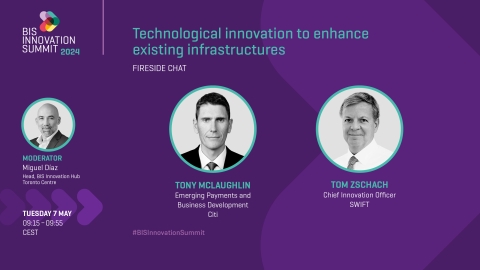
Fireside chat: Technological innovation to enhance existing infrastructures
BIS Innovation Hub project - real world usage: connecting domestic instant payment systems through Nexus
BIS Innovation Hub project showcase: building block to enhance existing infrastructures: project FuSSE

Fireside chat: AI Horizons and the Implications for Finance
BIS Innovation Hub project showcase: project Gaia
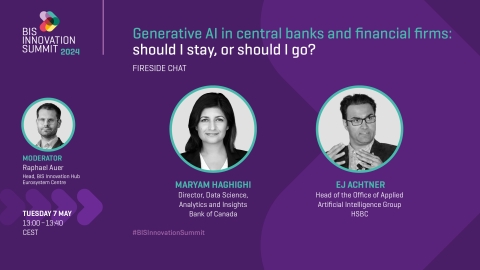
Fireside chat: Generative AI in central banks and financial firms: should I stay, or should I go?

BIS Innovation Hub project showcase: AI and privacy enhancing technologies against financial crime: project Aurora
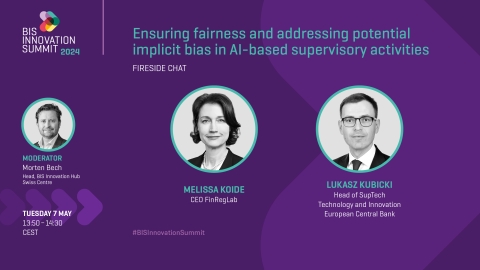
Fireside chat: Ensuring fairness and addressing potential implicit bias in AI-based supervisory activities
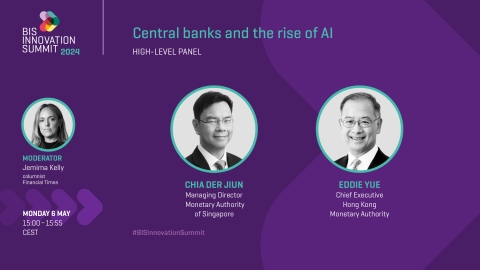
High-level panel: Central banks and the rise of AI
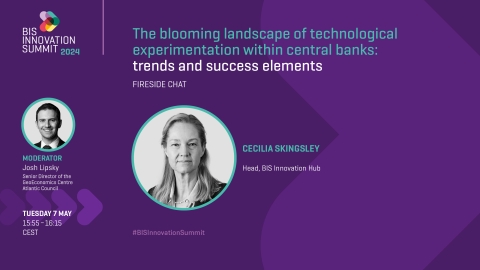
Fireside chat: The blooming landscape of technological experimentation within central banks: trends and success elements

Fireside chat: It takes two to tango: private-public sector partnerships in the context of the BIS Innovation Hub experiments
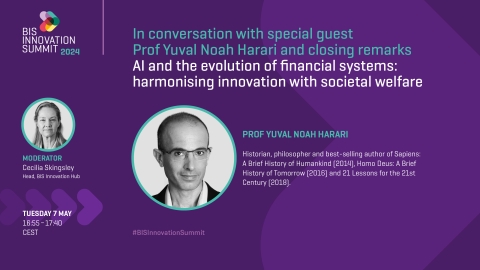
In conversation with Yuval Noah Harari and closing remarks: AI and the evolution of financial systems: harmonising innovation with societal welfare
Agenda
| 13:05 - 13:15 Opening remarks |
|---|
Agustín Carstens, General Manager, Bank for International Settlements |
| 13:15 - 13:30 Keynote speech | |
|---|---|
| Adopting new technological innovations now or waiting for them to mature further – the current dilemma for central banks' boards | François Villeroy de Galhau, Governor, Bank of France and Chair of the BIS Board of Directors |
| 13:30 - 14:25 High-level panel |
|---|
| The future of CBDCs: the road ahead for retail versus wholesale CBDCs |
Technology is evolving rapidly, and many experiments in the area of CBDC are in progress or have been concluded. Policy makers are still observing and deciding any next steps. In that context, panellists will discuss the future of retail and wholesale CBDCs. Speakers
Moderator |
| 14:25 - 14:40 BIS Innovation Hub project - real world usage: SNB's Project Helvetia III | |
|---|---|
| Project Helvetia III - The Swiss National Bank's pilot for wholesale CBDC | Thomas Jordan, Chairman, Swiss National Bank |
| 14:40 - 14:50 BIS Innovation Hub project showcase: project Mandala | |
|---|---|
| Maha El Dimachki, Head, BIS Innovation Hub Singapore Centre | |
| 14:50 - 15:00 BIS Innovation Hub project showcase: project mBridge | |
|---|---|
| Bénédicte Nolens, Head, BIS Innovation Hub Hong Kong Centre | |
| 15:45 - 16:25 Fireside chat |
|---|
| Tokenised private money |
Speakers
Moderator |
| 16:25 - 16:35 BIS Innovation Hub project showcase: project Pyxtrial | |
|---|---|
| Francesca Hopwood Road, Head, BIS Innovation Hub London Centre | |
| 16:35 - 17:15 Fireside chat |
|---|
| Tokenisation and smart contracts |
Speakers
Moderator |
| 17:15 - 17:25 BIS Innovation Hub project showcase: project Agora | |
|---|---|
| Morten Bech, Head, BIS Innovation Hub Swiss Centre | |
| 17:25 - 18:05 Fireside chat |
|---|
| Designing a legal framework for unified ledgers |
Speakers
Moderator |
| 08:20 - 08:30 Keynote speech |
|---|
Andréa M Maechler, Deputy General Manager, Bank for International Settlements |
| 08:30 - 09:15 Fireside chat |
|---|
| Finternet: the financial system for the future |
Speakers
Cecilia Skingsley, Head, BIS Innovation Hub |
| 09:15 - 09:55 Fireside chat |
|---|
| Technological innovation to enhance existing infrastructures |
Upscaling existing financial market infrastructures and interlinking them at national or cross-border levels is an evergreen topic for operators of financial market infrastructures. Panellists will discuss their approaches. Speakers
Miguel Díaz, Head, BIS Innovation Hub Toronto Centre |
| 09:55 - 10:10 BIS Innovation Hub project – real world usage: connecting domestic instant payment systems through Nexus | |
|---|---|
| Mamerto Tangonan, Deputy Governor, Bangko Sentral ng Pilipinas | |
| 10:10 - 10:20 BIS Innovation Hub project showcase: building block to enhance existing infrastructures: project FuSSE | |
|---|---|
| Miguel Díaz, Head, BIS Innovation Hub Toronto Centre | |
| 10:50 - 11:50 Fireside chat |
|---|
| AI Horizons and the Implications for Finance |
The conversation with our special guest will aim at considering the most recent developments in artificial intelligence, disentangling hype from trends that are going to shape the future of society and of the financial sector. Panellists will discuss opportunities and risks, and how central banks should think about the ongoing developments. Speakers
Moderator |
| 11:50 - 12:00 BIS Innovation Hub project showcase: project Gaia | |
|---|---|
| Raphael Auer, Head, BIS Innovation Hub Eurosystem Centre | |
| 13:00 - 13:40 Fireside chat |
|---|
| Generative AI in central banks and financial firms: should I stay, or should I go? |
Participants from financial firms and central banks will discuss the advantages and risks of using generative AI in the context of specific business use cases. Speakers
Moderator |
| 13:40 - 13:50 BIS Innovation Hub project showcase: AI and privacy enhancing technologies against financial crime: project Aurora | |
|---|---|
| Beju Shah, Head, BIS Innovation Hub Nordic Centre | |
| 13:50 - 14:30 Fireside chat |
|---|
| Ensuring fairness and addressing potential implicit bias in AI-based supervisory activities |
Participants from financial firms and central banks will discuss the advantages and risks of using generative AI in the context of specific business use cases. Speakers
Moderator |
| 15:00 - 15:55 High-level panel |
|---|
| Central banks and the rise of AI |
Panellists will explore central bank strategies amidst rapid AI advancements, focusing on AI's influence on the financial system and central banks' own use of AI tools for SupTech and forecasting tools. Speakers
Moderator |
| 15:55 - 16:15 Fireside chat |
|---|
| The blooming landscape of technological experimentation within central banks: trends and success elements |
The Head of the BIS Innovation Hub will discuss the key factors for effective innovation, drawing on the BIS's leading role in fostering technological innovation and modelling successful experimentation with new technologies for central banks and promoting public-private development partnerships. Speakers
Moderator |
| 16:15 - 16:55 Fireside chat |
|---|
| It takes two to tango: private-public sector partnerships in the context of the BIS Innovation Hub experiments |
For almost five years, the BIS Innovation Hub has gained extensive experience partnering with the private sector and academia in its projects. This fireside chat will explore the topic of how to collaborate for effective technological experimentation. Panellists will discuss partnering challenges including, incentives, practices, cultures and discuss lessons learnt. Speakers
Moderator |
| 16:55 - 17:40 In conversation with Yuval Noah Harari and closing remarks |
|---|
| AI and the evolution of financial systems: harmonising innovation with societal welfare |
Moderator |
| 09:00 - 10:30 Technical roundtables - Breakout sessions |
|---|
| Privacy and prevention of fraud and money laundering in payment systems |
Discussion topics 1) How can new data analytics detect and prevent fraud/money laundering in payments while also preserving privacy? Including project presentations Moderators
|
| Green finance |
Discussion topics 1) What are the challenges and technological solutions for central banks to achieve transparency on climate related risks in the financial system? Including project presentations Moderators
|
| Tokenisation |
Discussion topics 1) How to ensure interoperability between different tokenised ecosystems and the traditional ecosystems? Including short project presentations Moderators
|
| 11:00 - 12:30 Breakout sessions |
|---|
| Tokenisation |
Discussion topics 1) How to ensure interoperability between different tokenised ecosystems and the traditional ecosystems? Including short project presentations Moderators
|
| Cybersecurity for the future of payments and artificial intelligence |
Discussion topics 1) What are the key security challenges for new systems (eg CBDCs) and for the implementation new technologies (eg AI)? And how to address them? Including short project presentations Moderators
|
| Privacy and prevention of fraud and money laundering in payment systems |
Discussion topics 1) How can new data analytics detect and prevent fraud/money laundering in payments while also preserving privacy? Including project presentations Moderators
|
Speakers
François Villeroy de Galhau has been Governor of the Banque de France since November 2015 and was reappointed for a second term in November 2021. He is a member of the Governing Council of the European Central Bank and Chairman of the Autorité de contrôle prudentiel et de résolution (ACPR – Prudential Supervision and Resolution Authority). In 2022, he was also appointed Chair of the Board of Directors of the Bank for International Settlements . After graduating from ENA as an Inspector of Finance, he went on to join the French Treasury in 1988. He subsequently held various positions in ministerial offices and in Brussels, before being appointed Chief of Staff for the Minister of the Economy, Finance and Industry in 1997, and Head of the French General Tax Directorate in 2000. In 2003 he was appointed Chief Executive Officer of Cetelem, and in 2008 became Head of French Retail Banking at BNP Paribas. From December 2011 to May 2015 he served as Chief Operating Officer of BNP Paribas Group. He is the author of several books including L'Espérance d'un Européen (Odile Jacob, 2014) and Retrouver confiance en l'économie (Odile Jacob, 2021).
Mr. Shaktikanta Das, Governor of Reserve Bank of India, has been a career civil servant with over 43 years of distinguished service, primarily in the areas of finance, taxation, investment and infrastructure.
Mr. Das has served as Revenue Secretary and as Secretary, Economic Affairs, Government of India. Additionally, he also served as a Director in the Central Board of RBI rendering advice in the areas of Central Banking. He was also on the Board of Securities and Exchange Board of India (SEBI), the regulator for capital markets.
Mr. Das has served as India's Alternate Governor in the World Bank, Asian Development Bank (ADB), New Development Bank (NDB) and Asian Infrastructure Investment Bank (AIIB). He represented India in several international fora like the IMF, G20, BRICS and SAARC. Mr. Das has also acted as India's G20 Sherpa and Member, Fifteenth Finance Commission.
Mr. Das was conferred with the 'Governor of the Year' award by Central Banking Publication, UK in 2023. He was rated 'A+' by Global Finance Magazine in their Central Bank Report Card 2023. He was also conferred the 'Central Banker of the Year, Asia-Pacific 2020' award by the London based magazine-The Banker.
Joachim Nagel has been President of the Deutsche Bundesbank since January 2022. Prior to this, he had already served in management positions at the Bundesbank between 1999 and 2016, including as an Executive Board member from 2010 with responsibility for the Directorates General Markets, Controlling and IT. From 2016 to 2020, he worked for the KfW Group, including as an Executive Board member. In 2020, he moved to the Bank for International Settlements (BIS) where he became Deputy Head of the Banking Department. Dr Nagel studied economics at the University of Karlsruhe and received a doctoral degree in 1997. He also serves as a member of the Governing Council of the ECB, a Governor at the IMF and a member of the BIS Board of Directors.
Fabio Panetta is Governor of the Bank of Italy and Chairman of the joint Governing Board of the Italian Insurance Supervisory Authority (IVASS). He is also Chair of the BIS Committee on Payments and Market Infrastructures (CPMI) and the FSB Cross Border Payments Coordination Group.
Governor Panetta holds a degree in Economics from LUISS University (Rome), an M.Sc. in Economics from the London School of Economics and a Ph.D in Economics and Finance from the London Business School.
He joined the Bank of Italy in 1985, where he served as Deputy Governor and Senior Deputy Governor between 2012 and 2019. From 2020 to 2023 he was a member of the ECB Executive Board and Chair of the European Retail Payments Board (ERPB) and of the Euro Cyber Resilience Board for pan-European Financial Infrastructures (ECRB).
Author of numerous books and papers published in international journals such as the American Economic Review, The Journal of Finance, The Journal of Money, Credit and Banking, The European Economic Review, The Journal of Banking and Finance.
Thomas J. Jordan is Chairman of the Governing Board of the Swiss National Bank (SNB). He received his PhD in economics from the University of Bern in 1993. Following a three-year post-doctoral research position at the Department of Economics at Harvard University, he joined the SNB as an Economic Advisor in 1997. The University of Bern appointed him lecturer in 1998 and honorary professor in 2003, and he received an honorary doctorate from the University of Basel in 2017. In 2007, the Federal Council appointed Thomas J. Jordan to the position of Member of the SNB's Governing Board. In 2010, he was appointed Vice Chairman and in 2012 Chairman of the Governing Board. Thomas J. Jordan is Governor of the International Monetary Fund (IMF) for Switzerland. He is a member of the Board of Directors of the Bank for International Settlements (BIS) in Basel, and Chairman of its Banking and Risk Management Committee. He represents Switzerland in the Plenary and the Steering Committee of the Financial Stability Board (FSB) and is Chair of the FSB's Standing Committee on Budget and Resources (SCBR).
Dante Disparte is Chief Strategy Officer and Head of Global Policy at Circle, responsible for overseeing company strategy, communications, policy and public affairs. Prior to joining Circle, Dante served as a founding executive of the Diem Association, leading public policy, communications, membership, and social impact. With 20 years in entrepreneurship and global risk, Dante is active in digital currency standardization as a member of the World Economic Forum's Digital Currency Governance Consortium. He has served on the Federal Emergency Management Agency's National Advisory Council. He is a frequent contributor to major media, holds degrees from Harvard and NYU Stern, and is recognized for his leadership by the Washington Business Journal and the Powermeter 100 list. He is a co-author of the book "Global Risk Agility and Decision Making" (2016).
Joasia E. Popowicz is the associate editor and fintech correspondent at Central Banking. She chairs the FinTech RegTech Global Awards and is the fintech subject specialist for the Central Banking Benchmarking Service. Previously, Joasia worked as a data journalist across Risk Quantum and Central Banking. She was a data journalism fellow at the Brown Institute for Media Innovation and Enigma, a fintech in New York. The Brown Institute is a joint initiative between Stanford University and Columbia University that funds projects at the intersection of journalism and technology. Joasia graduated with an MS in investigative journalism from the Toni Stabile Center for Investigative Journalism at Columbia Journalism School.
Stella Lim is Chief Operating Officer at Partior. Stella leads Partior's global partnerships and operations. She also oversees business development, customer onboarding, government affairs, and communications and marketing. Before assuming her role at Partior, Stella was Managing Director for SWIFT in the Asia Pacific region, where she orchestrated regional management and strategic planning for the organisation. Her tenure at SWIFT spanned 14 years. Prior to her role at SWIFT, Stella held senior positions in the information technology and banking sectors at organisations such as SmartStream Technologies, Internet Security Systems, Netik.com and Deloitte.
Rebecca Simmons is a partner in Sullivan & Cromwell's Financial Services and Capital Markets Groups, head of its payments practice and co-head of its FinTech practice. Her practice focuses on financial services functions such as payments, clearing and settlement, including the formation and regulation of financial market utilities, and the development of new approaches to financial services operations, such as the use of new technologies by banks and fintech companies. Rebecca led the drafting of the July 2023 Legal Report on the Regulated Liability Network Proof of Concept.
Dr. Jong-Goo Yi is a senior partner at Kim & Chang, the largest law firm in Korea specializing in financial regulatory and compliance as well as FinTech, blockchain and digital asset matters. He is a member of Regulatory Reform Committee of the Financial Services Commission, the government authority responsible for financial policies of Korea and supervision of financial institutions, as well as a member of the Money & Banking Forum within the Bank of Korea, advising on CBDC and digital asset issues. He is a former Commissioner of the Financial Services Commission, the Korean government authority responsible for financial policies and supervision of financial institutions and was a Korea's representative on the Steering Committee of the Financial Stability Board.
Siddharth Shetty designs Digital Public Infrastructure that socio-economically empowers individuals and small businesses. He led the creation of the Data Empowerment & Protection Architecture (DEPA), a techno-legal framework that gives individuals and small businesses control over their data. He co-founded Sahamati and currently serves as its CTO, a network of over 500 financial institutions that enable consented sharing of financial data. Shetty has helped architect various building blocks of the India Stack. He has been a participant in numerous government and regulatory committees and advises both advanced and emerging economies on their implementation of digital public infrastructure. Additionally, he serves as a Technology Advisor for Unified Interfaces at the Foundation for Interoperable Digital Economy (FIDE) and is a former advisor to India's Ministry of Finance.
Tony McLaughlin is responsible for Emerging Payments and Business Development in Citi's Treasury and Trade Solutions (TTS) business. He works on the future of money and the product-market fit between regulated finance and the modern digital economy. Tony is the originator of the 'Regulated Liability Network' concept that explores the application of shared ledger technology to the sovereign currency system.
He joined Citi in 2004 and has been Cash Management Head for Asia Pacific and the Global Transaction Services Head for the United Kingdom. Before that, Tony was in a number of payments and fintech initiatives at ABN AMRO, HSBC Holdings and Barclays.
Tom Zschach is Chief Innovation Officer at SWIFT. Tom is responsible for driving innovation across the company and collaborating with the Swift community and partners to create new growth opportunities and position the company for the future.
Prior to joining Swift in 2020, Tom served as the Chief Information Officer at CLS Group and at LCH.Clearnet. In both cases, Tom served on the Executive Management Committee played a critical role in shaping the technology strategy of the organisation. Throughout his career, Tom has worked for over twenty years in several investment banks, including Bank of America / Merrill Lynch as Head of Rate and Currencies Technology and at Barclays Capital as Managing Director in Technology and Global Head of Equities, Prime Brokerage and Client Technology.
Deputy Governor Mamerto E. Tangonan is the head of the Payments and Currency Management Sector (PCMS) of the Bangko Sentral ng Pilipinas (BSP), which is tasked to address the interplay between digital money and physical currency and support the digital transformation of the country's financial services. The PCMS also operates the Peso real-time gross settlement payment system as well as the country's currency production and gold refinery facilities.
DG Tangonan brings with him nearly three decades of experience in digital and traditional financial services, telecommunications, technology, financial inclusion, and consulting services.
Before joining the Bangko Sentral ng Pilipinas, he led a six-year United States Agency for International Development (USAID)-funded program on the E-PESO project aimed at accelerating the shift of the Philippine economy from cash to digital payments. The E-PESO team provided technical assistance to the BSP in developing the National Retail Payment System (NRPS) Framework which underpinned the series of regulatory and development reforms towards modernizing the Philippine retail payments landscape. The implementation of NRPS led to the creation of the instant payment system or InstaPay, and the national QR code standard or QR Ph, among others.
A civil engineer by education, Tangonan earned his bachelor's degree from the University of the Philippines and completed various degrees and programs from the Asian Institute of Management, Harvard Kennedy School, and Stanford Graduate School of Business.
Jeremie Harris is the co-founder and CEO of Gladstone AI, a company that works with researchers at the world's top AI labs, and with U.S. national security agencies to address extreme risks from AI. Gladstone has worked closely with top contingency planners and operators in the US government on developing risk mitigation strategies for advanced AI, and carried out the first-ever assessment of catastrophic risk from advanced AI commissioned by the U.S. government. Jeremie has briefed cabinet-level officials in the US and Canada, trained hundreds of senior U.S. military and national security officials on AI risk and led intergovernmental workshops on AI risk for cabinet-level staff.
Jeremie is also the author of the bestselling book, Quantum Physics Made Me Do It and the host of the Last Week in AI podcast.
Emily Prince is the Group Head of Analytics and CEO of Yield Book at the London Stock Exchange Group (LSEG). In this capacity Emily is the business head responsible for Analytics and AI customer solutions and leads Analytics initiatives as part of LSEG strategic partnership with Microsoft. She leads teams of quants, data scientists and financial engineering SMEs who are responsible for transforming trusted content into actionable insights. Emily has 20 years of experience in Financial Services at institutions including Lehman Brothers, RBS, Barclays and BlackRock. Emily holds Board positions with Turquoise and Finbourne.
Edward J. Achtner (EJ) leads HSBC's Office of Applied Artificial Intelligence. EJ's work focuses on developing and commercialising cutting-edge, responsible, and ethical AI capabilities and products including those related to Generative AI and Large Language Models for the Global Commercial Bank, Global Bank and Markets, and other businesses and functions. Previously, EJ was the Global Head of Wholesale Digital Architecture at HSBC, directing a wide range of strategic initiatives across Agile/Value Stream Transformation, Business Architecture, program remediation, and technology deployment. At Bank of America EJ led its retail banking digital platforms (innovation, mobile, desktop partnerships, and digital design).
Maryam Haghighi is the Director of Enterprise Data Science and Insights, and the Head of Data Science Hub at the Bank of Canada. Maryam has a track record of delivering impactful solutions at the intersection of data, digital transformation, emerging technologies, and risk management. She built the Data Science Hub of the Bank from the ground up.
Before joining the Bank of Canada, Maryam led the work that pioneered the spacebased data analytics systems of a new satellite constellation. She was Canada's delegate to international advisory groups for air navigation risk management under the United Nations.
Melissa Koide is the CEO of FinRegLab, a nonprofit research center that tests new technologies and data and facilitates dialogue to inform public policy and drive the financial sector toward a responsible and inclusive financial marketplace. FinRegLab evaluates how technology and data can be safely used to increase financial inclusion and improve financial services for consumers, small businesses, and communities. FinRegLab is currently evaluating the explainability of complex machine learning algorithms in credit underwriting for fairness, model governance, adverse action notices, and inclusion.
Lukasz Kubicki is the Head of the Supervision Technology Section at the European Central Bank. He leads the innovation strategy and drives the implementation of cutting-edge technologies such as Artificial Intelligence across ECB Banking Supervision. Since 2023, he has served as Co-Chair of the SupTech and RegTech, and MonPolTech Working Group of the BIS Innovation Network. Prior to his tenure at the ECB, Lukasz held different roles at McKinsey & Company, managing engagements in strategy and digitalization within the banking sector.
Mr Chia Der Jiun was appointed Managing Director of the Monetary Authority of Singapore (MAS) on 1 January 2024. He was previously Permanent Secretary (Development) at the Ministry of Manpower (MOM). Prior to his appointment at MOM in 2020, Der Jiun had spent 18 years at MAS in a range of functions covering monetary policy implementation, reserve management, macroeconomic surveillance, and banking supervision and regulation. At the MAS, he was last Deputy Managing Director (Corporate Development) with responsibilities for risk, finance, payment system and currency operations, HR and organisation transformation. Der Jiun also served as Executive Director for Southeast Asia at the International Monetary Fund from 2011 to 2013. He holds a BA(Hons) in Politics and Economics from Oxford University and an MBA from INSEAD.
Pablo Hernández de Cos is Governor of the Banco de España and member of the Governing and General Council of the ECB. He is Chair of the BCBS, of the Board of Governors of the CEMLA and of the Advisory Technical Committee of the ESRB. He is member of various European and International Committees including the ESRB, the FSB, the BIS Group of Governors and Heads of Supervision and the Advisory Board of the FSI. He is also Vice-Chairman of the Board of the Spanish Macroprudential Authority Financial Stability Board (AMCESFI).
He holds a PhD in Economics (Complutense University, Madrid), a degree in Economics and Business Studies (CUNEF) and a degree in Law (UNED).
Mr Eddie Yue was appointed Chief Executive of the Hong Kong Monetary Authority (HKMA) from 1 October 2019. He began his career as an Administrative Officer in the Hong Kong Government in 1986. He joined the HKMA upon its establishment in 1993 and was promoted to Division Head a year later. He was appointed Executive Director in 2001 and subsequently Deputy Chief Executive in 2007 before taking up his current position.
Mr Yue has participated in numerous areas of the HKMA's work. During his tenure as Deputy Chief Executive, he steered major policies and initiatives relating to reserves management, research, external affairs and market development. Mr Yue was also actively involved in tackling major financial crises and played an instrumental role in enhancing the Linked Exchange Rate System.
Jemima Kelly is a columnist at the Financial Times. She writes a weekly column about everything from culture wars to crypto, and also writes features, essays, reviews and other pieces for the newspaper. She was the host of series four of the FT's Tech Tonic podcast series, "A Sceptic's Guide to Crypto". Before becoming a weekly columnist, Jemima was a reporter for the FT's irreverent business, markets and finance blog, Alphaville. And before joining the FT, Jemima was a reporter on the markets desk at Reuters, where she mainly wrote about the foreign exchange market and bitcoin. She has also written politically focused articles for The Economist.
Josh Lipsky is the senior director of the Atlantic Council's GeoEconomics Center. He previously served as an advisor at the International Monetary Fund (IMF) and Speechwriter to Christine Lagarde. Prior to joining the IMF, Josh was an appointee at the State Department, serving as Special Advisor to the Under Secretary of State for Public Diplomacy. Before joining the State Department, Josh worked in the White House and was tasked with helping plan President Obama's participation at the G-20 and other global summits. He has also worked on Capitol Hill and at the Daily Show with Jon Stewart.
He is a term-member at the Council on Foreign Relations and an Economic Diplomacy Fellow at Harvard University's Belfer Center for Science and International Affairs. Josh is a licensed attorney, accredited to practice in Maryland and Washington, D.C.
Bob Wardrop is an academic, investor and entrepreneur. He is a Professor of Management at Cambridge Judge Business School and the Founding Director of the Cambridge Centre for Alternative Finance (CCAF), a research centre investigating new financial instruments and channels that emerge outside of the traditional financial system. He is also a founder and CEO of RegGenome, a spinoff business that works on translating regulatory information into a machinereadable format. Having worked on both sides of the proverbial fence, Bob has rich insights on the topic of public-private collaboration.
Catherine Gu is Visa's Global Head of CBDC and Tokenized Assets, leading Visa's digital currency program, building blockchain tokenization solutions with financial institutions, central banks and global technology companies. She also leads Visa's crypto protocol team, collaborating with external blockchain partners to drive research and infrastructure exploration. Prior to Visa, Catherine worked at J.P. Morgan and hedge fund asset management company Man Group. She spent 2 years on stablecoin research while studying at Stanford University with Prof. Dan Boneh. She also worked at 2 crypto startups: Anchorage and Gauntlet.
Prof. Yuval Noah Harari is a historian, philosopher, and the bestselling author of Sapiens: A Brief History of Humankind, Homo Deus: A Brief History of Tomorrow, 21 Lessons for the 21st Century, and the series Sapiens: A Graphic History and Unstoppable Us. His books have sold 45 million copies in 65 languages. Prof. Harari is considered one of the world's most influential public intellectuals today – bringing insights from the intersections of history, biology, philosophy and the potential impacts of future technologies like artificial intelligence on human society.