Project Leap aimed to prepare central banks and the global financial system for a transition towards quantum-resistant encryption.
Quantum computers present a cyber threat to financial data
Quantum computers, should they reach sufficient size and power, may be able to break the encryption schemes widely used today to secure financial transactions, communication and data. This makes quantum computing one of the most significant cybersecurity threats facing the financial system, potentially exposing financial transactions to attack.
While it is still unclear when quantum computing technology might be adopted on a large scale, its potential as a cyber threat to the financial system is already a matter of concern. Malicious actors can intercept and store confidential, classically encrypted data with the intention of decrypting it later when quantum computers become powerful enough to do so. This means that data stored or transmitted today are, in fact, exposed to "harvest now, decrypt later" attacks by a future quantum computer.
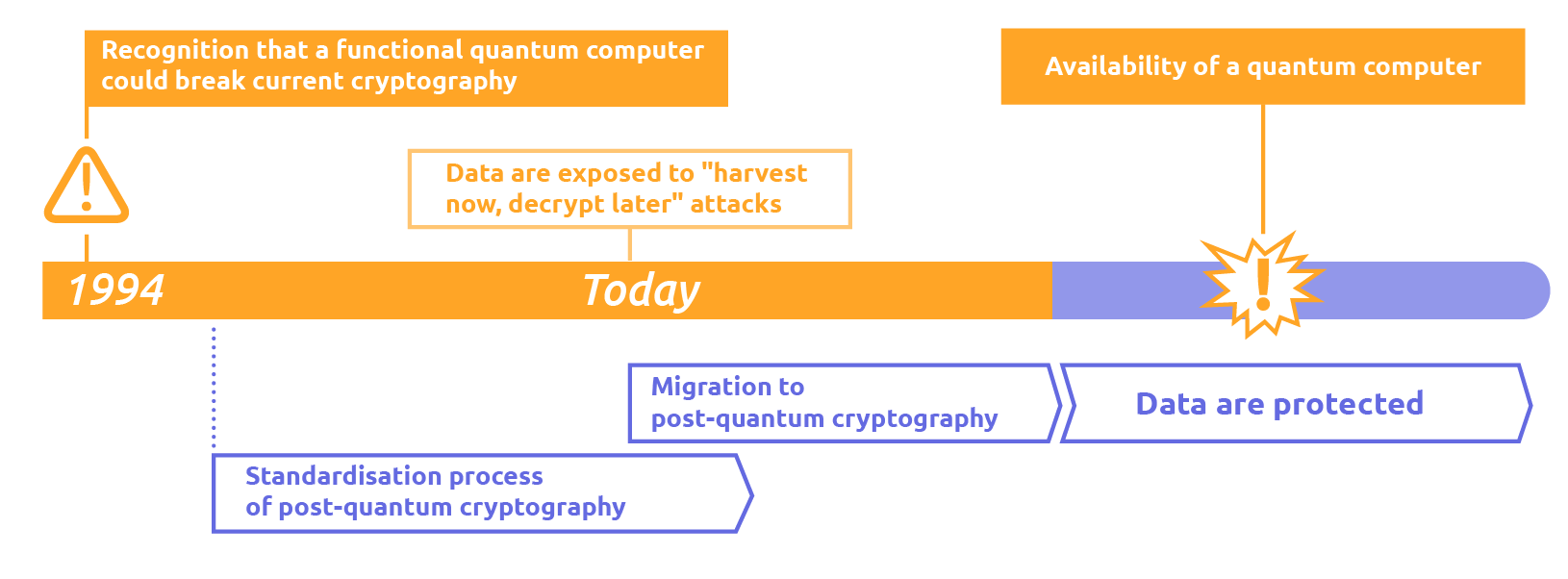
To address these risks, the financial sector needs to pre-emptively implement robust communication and data protection technologies. Given the long-term sensitivity of financial data and the complexity of IT systems, a transition phase should be initiated well in advance so that quantum-resistant encryption schemes can be implemented.
Preparing for the cyber threat of quantum computers
The BIS Innovation Hub and its partners have successfully completed two phases of Project Leap.
Leap Phase 1, a collaboration between the BIS Innovation Hub, Bank of France, and Deutsche Bundesbank, tested the implementation of post-quantum cryptography between two central bank IT systems. A traditional public key algorithm was implemented alongside quantum-resistant algorithms in a hybrid encryption scheme, achieving quantum-resistant confidentiality of payment messages sent across two distanced IT systems. The project demonstrated that implementing quantum-safe cryptography in the financial system is feasible and identified performance impacts and the need for more testing.
Leap Phase 2, a collaboration between the BIS Innovation Hub, Bank of Italy, Bank of France, Deutsche Bundesbank, Nexi-Colt and Swift, tested post-quantum cryptography in an operational payment system. Most payment systems rely on public key cryptography and require long-term data confidentiality, making them vulnerable to the quantum threat. At the same time, as the backbone of modern economies, payment systems are critical to the smooth functioning of commerce, finance, and daily life – protecting them is essential to preserving financial stability.
By replacing traditional digital signatures with post-quantum cryptography while sending liquidity transfers, Leap Phase 2 demonstrated the feasibility of quantum-proofing payment systems.
The two successful technical experiments of Project Leap 1 and 2 - together with accompanying studies on the risks and opportunities from quantum computing and roadmap to quantum-readiness - have laid important groundwork for the quantum-safe journey of the financial system. This collaborative initiative underscores the commitment of central banks to proactively safeguarding the integrity and resilience of financial infrastructures. They reflect a forward-looking dedication in ensuring that payment systems remain secure in the face of emerging technological threats.
Read more details below:
Project Leap Phase 2 confirmed that post-quantum cryptography can be successfully implemented in payment systems.
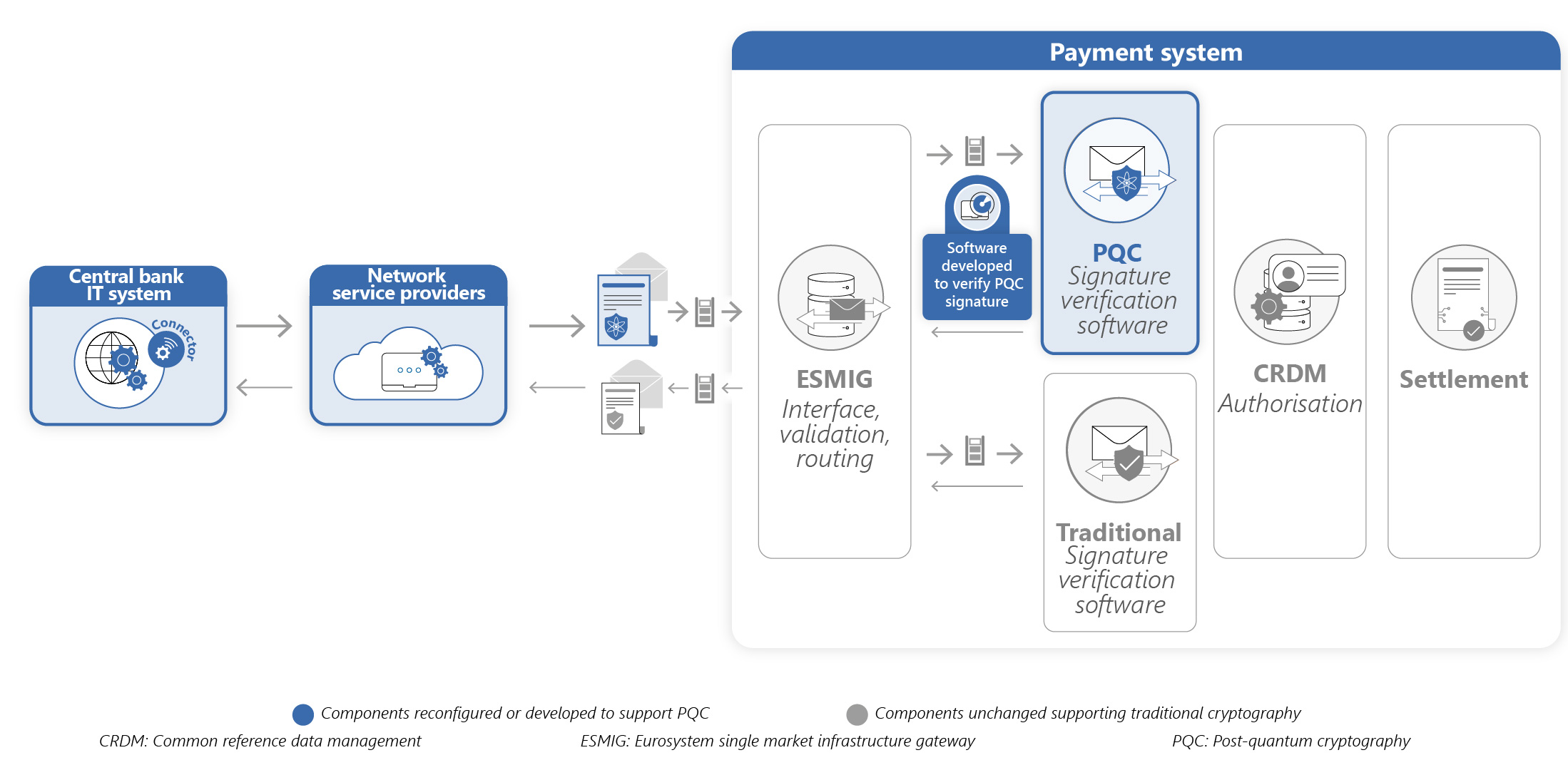
The experiment replaced traditional digital signatures with post-quantum cryptography in an existing payment system, while sending liquidity transfers. It involved modifying numerous system components to ensure compatibility with updated cryptographic libraries. All test scenarios were successfully executed, demonstrating the feasibility of migrating payment systems to post-quantum cryptography. Besides demonstrating functional correctness, the experiments highlighted that post-quantum cryptography leads to significantly higher processing time than traditional algorithms, which will need to be taken into consideration when planning migration.
Migrating payment systems to quantum-safe solutions is a complex and high-stakes process that affects the entire financial ecosystem. Project Leap Phase 2 also highlighted the importance of collaboration across institutions.
Leap Phase 1 tested the implementation of post-quantum cryptographic protocols between two central banks with the aim of advancing the central banking community's knowledge of post-quantum cryptography.
To achieve this goal, one traditional public key algorithm was implemented alongside several quantum-resistant algorithms in a hybrid cyphering mode, with the aim of maintaining the confidentiality of messages sent across two distanced IT systems. The quantum-resistant communication channel was tested with payment messages transmitted between the Bank of France and the Deutsche Bundesbank. The objective was to analyse how existing products and processes perform using quantum-resistant technology.
Project Leap Phase 1 overview
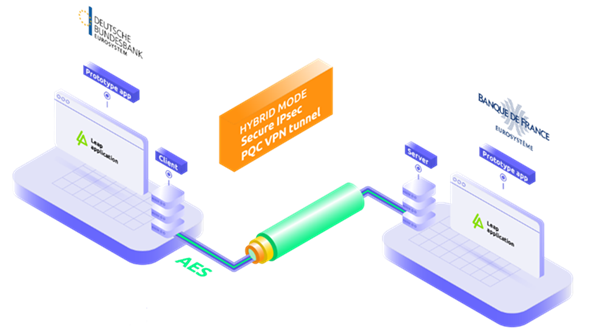
To foster a broader understanding of post-quantum cryptography, the first phase of Project Leap explored solutions that embody the notion of cryptographic agility, and it demonstrated that applying new quantum-resistant schemes is possible. It also concluded that central banks will need to allow for a transition phase in their cyber security roadmaps, so that they are prepared once the final standards are published.
The BIS has also published two papers to deepen the understanding of quantum computing and its implications for the financial system:
Opportunities and risks – Quantum computers are still in an experimental phase, but in the future, they may have a profound impact on the financial system. By providing faster and potentially more efficient solutions, quantum computers have the potential to solve certain complex problems that are of paramount interest in the field of economics and finance. Meanwhile, the advent of quantum computers also introduces a potential threat to financial stability, especially through their ability to breach some of the most widely used cryptographic algorithms. This paper explores the transformative potential of quantum computing and its applications to the financial system, including the potential benefits as well as the main risks.
Roadmap to quantum-readiness – This paper provides a framework to support the financial system in the transition to quantum-safe cryptographic infrastructures. It emphasises the need to start the transition today – with broad awareness and cryptographic inventory as critical foundations. Ensuring the continued security and resilience of the global financial system may involve cryptographic agility, defence in depth and phased migration.