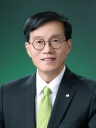
My dear colleagues at the Bank of Korea,
It feels like only yesterday that I was inaugurated as Governor of the Bank of Korea four years ago, and yet here I am, offering my farewell.
Looking back, the past four years were not a period that unfolded within the bounds we had anticipated, but rather one during which we were repeatedly required to push beyond them. Immediately following my inauguration, as inflation accelerated globally in the wake of the Russia-Ukraine war, the Bank had to raise the Base Rate to 3.5 percent, including two historic "big-step" increases.
Real estate-related financial market unrest and the failure of Silicon Valley Bank in the US also posed risks to financial stability. Subsequently, while we were responding to rising metropolitan housing prices and mounting household debt, an unprecedented declaration of emergency martial law triggered an economic contraction. Amid domestic political uncertainty, the US tariff policy shifted sharply, while tensions in the Middle East contributed to a significant rise in the exchange rate.
Our economy was repeatedly tested by a succession of unforeseen shocks, and without your dedication and support, managing these crises would have been far more difficult.
There were not a few moments when I felt a deep sense of fulfillment. I take particular pride in having brought elevated inflation back to the target level of around 2 percent through monetary policy ahead of other major central banks. We have also improved our communication with the market by introducing Korean-style forward guidance, and strengthened our role in policy advisory through the publication of more than twenty structural reform reports. It is also a meaningful achievement that I had the honor of serving as the first governor from a non-reserve currency country to chair the BIS Committee on the Global Financial System (CGFS), and that we steered the household debt ratio - which had risen uninterrupted for over two decades - toward a declining trend for the first time.
Thanks to the efforts of my predecessor, it was also a blessing to have moved into our new building, which provided an excellent environment to host various domestic and international events. The bright smiles of the children from the daycare center whom I occasionally encountered will remain with me for a long time. I am deeply proud of each of you for raising participation in our year-end giving campaign from around 60 percent to a remarkable 80 percent - an outcome I would not have thought possible.
Dear colleagues,
I trust that, in due course, history will render its own verdict on the policies pursued during my tenure. It weighs on me that I am passing on the reins at a time when our foreign exchange and financial markets have yet to fully stabilize, with the conflict in the Middle East still ongoing. And yet, I leave with confidence. The crisis management capabilities you have demonstrated, time and again, are second to none among the world's advanced economies. I have no doubt that, under the incoming Governor Hyun Song Shin, who needs no introduction in the central banking community, you will restore stability to our foreign exchange and financial markets without delay.
Over the past four years, as we have navigated successive crises, one lesson has become clear to me once again: it is increasingly difficult to achieve economic stability and growth through monetary and fiscal policy alone. Even as structural changes in the economy have gradually eroded the effectiveness of these traditional tools, public expectations of what policymakers can and should deliver remain anchored to the successes of an earlier era - and that gap continues to widen.
Our foreign exchange market offers a telling illustration. Where capital flows were once driven largely by foreign investors, domestic actors - Korean corporations, individual investors, and the National Pension Service - now exert an increasingly powerful influence. The overseas investments of Korean residents are shaped not only by interest rate differentials, but by a complex interplay of labor market conditions, tax policy, pension systems, and global geopolitical risks. In this environment, attempting to manage the exchange rate through market intervention and interest rate policy alone - without accompanying institutional reforms - risks generating distortions far greater than those it seeks to address.
The challenges of low birth rates and low growth, too, cannot be adequately addressed through short-term remedies such as monetary and fiscal policy. What they demand, however painful the path, are structural reforms in labor markets, in education, and across the many other areas where competing interests and entrenched conflicts must be confronted and resolved. In the same vein, we need to take a closer look at our industrial structure. While it is reassuring that the semiconductor boom has helped maintain a degree of stability in the economy and the foreign exchange market, this also reflects our economy's excessive reliance on specific industries. The resulting polarization is in fact becoming more pronounced, making it difficult to view the situation as entirely positive.
In my inaugural address four years ago, I said that "our responsibility cannot be confined to the boundaries of monetary policy alone," and that we should work to make the Bank of Korea "the nation's bona fide top think tank best informed on our economy," reflecting my belief that structural reforms are essential to ensuring the effectiveness of monetary policy. I continue to hold that view today. As structural reforms are under way, I hope that the Bank of Korea will continue to study medium- to long-term challenges to address structural issues facing the Korean economy, including education, housing, balanced regional development, youth employment, and elderly poverty.
Dear colleagues,
Before I conclude, I would like to extend my sincere gratitude.
First, I would like to thank the members of the Monetary Policy Board. During periods of heightened uncertainty, you provided clear direction through in-depth discussions. You also actively supported new initiatives, such as the publication of the K-dot plot and efforts to develop sovereign AI. My deep appreciation goes to the Senior Deputy Governor, Deputy Governors, the Chief Economist, and all other executives. It has been a great privilege to work with all of you, who have shown mutual respect and embraced different views with an open mind.
I would like to extend my sincere appreciation to our staff for supporting our policy decisions, and to our researchers for helping build a "louder" Bank of Korea. I am also deeply grateful to all who responded to market volatility around the clock, to those who cooperated closely with the financial authorities, and to those, including members of the press, who conveyed the Bank of Korea's messages to the public and the markets.
I am also sincerely grateful to those in the management and administrative departments who have quietly and steadfastly supported the operation of our institution, and to those who have sustained the organization from positions in regional branches and overseas representative offices, as well as behind the scenes.
To the staff of the Secretariat, who worked most closely with me by coordinating my schedule, assisting with policy matters, and even taking thoughtful care of my health, I extend my sincere appreciation. Your dedication enabled me to carry out an extremely demanding schedule.
My dear colleagues,
The anthem of the Bank of Korea begins with the phrase, "With the trust of the people." I believe that the people's trust in the central bank is ultimately determined by the central bank's competence. The past four years have been a rewarding time, during which I had the privilege of witnessing your exceptional abilities. I hope that you will never become complacent, but will instead continue to set higher goals and achieve even greater progress in the years ahead.
Lastly, my heartfelt gratitude to my family. To my wife, who has always been by my side - worrying about me in silence, helping me remain grounded at every critical moment, and leading me to faith in God - and to my two daughters and my son, who have supported me steadfastly, I offer you my deepest thanks and love.
Now, I take my leave from this position.
Once again, I extend my sincere gratitude to everyone who has accompanied me on this journey. The time I have spent with all of you has been deeply fulfilling and, above all, the greatest honor.
I wish you and your families continued health and happiness.
Thank you.