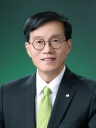
My dear colleagues at the Bank of Korea,
The year 2026 has dawned. I sincerely wish all of you and your families health and peace in the your daily lives. First of all, let me express my sincere gratitude to all of our staff who did their best in their respective roles despite difficult circumstances over the past year, as well as to the members of the Monetary Policy Board for their leadership in conducting monetary policy. I would also like to take this opportunity to thank your families, who have steadfastly supported you behind the scenes. Thanks to your collective dedication, the Bank of Korea was able to endure the past year successfully.
Last year, our economy faced numerous challenges and upheavals, making it difficult to see even a short distance ahead. We went through a difficult phase in the first quarter, experiencing negative growth due to the fallout from the unexpected political shock. In April, the global trade environment also deteriorated sharply following the Trump administration's unprecedentedly aggressive tariff measures. Fortunately, as political risks eased following the presidential election in June, growth momentum partially recovered. Nevertheless, the trade conflict surrounding the Korea–United States investment agreement persisted until the APEC Leaders' Meeting at the end of October, which made it difficult to gauge the pace of economic recovery.
Against this backdrop, the Bank of Korea was also required to make difficult policy judgments at every moment in conducting monetary policy. Immediately after the declaration of martial law, we focused on instilling confidence at home and abroad that the economic system was operating normally and independently from politics. Subsequently, as growth slowed amid stable inflation, the Bank cut the Base Rate twice during the first half of the year. The Bank also, continued to support vulnerable sectors through the Bank Intermediated Lending Support Facility. As we moved into the second half of the year, heightened instability in the housing market in the Seoul metropolitan area and increased exchange rate volatility intensified the tension between the two objectives of growth and financial stability. As a result, the Bank decided to keep the Base Rate unchanged.
My dear colleagues,
This year, the conditions surrounding our economy are also expected to remain challenging. While it may be desirable to deliver a message of hope at the start of a new year, I believe that today's occasion should go beyond a simple New Year's greeting. It should serve as a moment to soberly recognize the realities we face and to reaffirm our responsibilities and resolve as a central bank.
Looking at the external conditions this year, a range of risk factors related to the global trade environment and the fiscal policies of major economies remain present. First of all, there is significant uncertainty regarding the global trade landscape and the monetary policies of major countries. On the trade front, risks concerning tariffs and trade policy could resurface depending on how judicial and political developments in the United States unfold. If tensions between the United States and China were to escalate amid discussions on "global imbalances," a key agenda item at this year's G20 meetings, it would be difficult for Korea to remain unaffected.
Uncertainty surrounding the investment agreement with the United States cannot yet be considered resolved. Although related risks have eased since the APEC Leaders' Meeting last October, further clarification is still needed with respect to specific investment targets and modalities. In addition, we are well aware of concerns that annual US-bound investment flows of up to USD 20 billion could exert depreciation pressure on the Korean won. However, this figure represents the maximum ceiling. As stipulated in the bilateral MOU, the actual scale of investment will be determined within a range that does not undermine foreign exchange market stability (Ministry of Trade, Industry and Resources, 2025). In other words, this does not imply a mechanical annual outflow of USD 20 billion in investment funds to the United States, and the Bank of Korea, together with the government, will ensure that the actual decided-upon investment flow does not compromise foreign exchange market stability. This principle will be firmly upheld without exception.
Moreover, there is also a high degree of uncertainty surrounding monetary policy in major economies. One key source of uncertainty relates to the future policy direction of the Federal Reserve and its implications for global financial markets, particularly after the scheduled end of Chair Powell's term in May. In addition, other major economies, including Japan, the euro area, and Australia, have begun policy rate hikes or may potentially shift their policy stances. Such divergences in monetary policy paths across countries could amplify market volatility.
Attention should also be paid to the impact of fiscal soundness and government bond market conditions in major economies on domestic and global financial markets. Fiscal conditions have deteriorated markedly due to increased fiscal spending associated with population aging and a rising interest payment burden stemming from elevated government debt accumulated since the COVID-19 pandemic (Bank of Korea, 2025a; IMF, 2025a). Reflecting these developments, global long-term government bond yields have risen substantially. More recently, as the influence of non-bank financial institutions has expanded in repo markets collateralized by government bond, vigilance has increased regarding the risk that vulnerabilities could be amplified in the event of a shock. (Banerjee, R. et al., 2025). As market concerns about fiscal soundness increase and their impacts may differ across countries, we need to closely monitor spillovers to Korean government bond yields. At the same time, we should take the situations faced by other economies as a cautionary lesson and maintain vigilance against the expansion of fiscal and financial risks.
Meanwhile, the possibility that expectations for the global AI industry could be revised also represents another key risk factor for financial markets (IMF, 2025b). Recently, amid a rapid rise in the stock prices of AI-related companies, concerns have intensified in the United States that price correction risks could spill over more broadly due to interconnected debt structures among AI firms. Given Korea's competitiveness in semiconductor manufacturing, which underpins the AI industry ecosystem, Korea is likely to maintain a relatively high degree of resilience regardless of the outcome of global competition among AI firms. Nevertheless, as domestic investors' exposure to global AI companies has expanded significantly, it has become increasingly important to manage risks in preparation for the possibility of a sharp correction in the US stock market.
My dear colleagues,
Let me now turn to domestic conditions. First, consumer price inflation has recently risen to the low-to-mid 2% range, reflecting the effects of adverse weather conditions and the rising exchange rate. However, once these temporary factors ease, inflation this year is expected to record 2.1%, the same as last year, as demand pressures remain subdued. Such a trajectory would be more stable than those of major economies. That said, we need to remain mindful that inflationary pressures could intensify again if the elevated level of the exchange rate persists. In addition, there is concern that, as a result of cumulative high inflation since the pandemic, elevated living costs are placing a heavier burden on low-income households. To address these challenges, stabilizing inflation through monetary policy alone will not be sufficient. For items whose prices remain high by international standards, it will also be necessary to pursue structural reforms, including improvements in distribution structures and greater import openness (Im, W. et al., 2024).
Turning to growth, the growth rate this year is projected at 1.8%, significantly higher than last year's 1.0%, and close to its potential level. However, this outlook is subject to considerable uncertainty on both the upside and the downside, depending on developments in the global trade environment, the semiconductor cycle, and the pace of the recovery in domestic demand (Bank of Korea, 2025b). Moreover, excluding the IT sector, which is expected to lead growth this year on the back of the global semiconductor upturn, the growth rate would be limited to 1.4%, and, amid widening disparities in the pace of recovery across sectors, a sizable gap is likely to open up between headline indicators and actual economic sentiment. Such a "K-shaped recovery" can hardly be regarded as sustainable or complete. As I noted in last year's New Year's speech, it is essential to continue our efforts toward structural reform, including diversifying the growth base by developing new industries, and to prevent a recurrence of growth and recovery patterns that are overly concentrated in specific sectors.
Next, I would like to address exchange rate volatility, which has recently become a source of growing concern. At the end of last year, the Korean won–US dollar exchange rate rose to the upper 1,400 won range, and market vigilance remains high. Given that Korea is a net external creditor country with sound external fundamentals, it is not appropriate to view the current situation as comparable to past crisis episodes based solely on the recent level of the exchange rate. However, it is important to remain mindful that a rising exchange rate can add to inflationary pressures and weigh relatively heavily on domestic-oriented firms, thereby exacerbating the polarization discussed earlier.
While it is difficult to pin down an appropriate level for the exchange rate, the recent level in the upper 1,400 won range appears to be substantially misaligned with Korea's economic fundamentals. The elevated exchange rate reflects, among other factors, growth and interest rate differentials between Korea and the United States, as well as the so-called "Korea discount." Addressing these issues will require, over the medium to long term, strengthening industrial competitiveness and expanding investment incentives through capital market reforms. Meanwhile, the relatively larger depreciation of the won since last October, compared with the US dollar, also reflects persistently rising residents' overseas securities investment, which has created supply-demand imbalances in the foreign exchange market and, in turn, exerted substantial short-term upward pressure on the exchange rate. In response, the foreign exchange authorities found it necessary to implement short-term measures late last year to stabilize the foreign exchange market.
In particular, as we look back on the won's depreciation over the past three years, I strongly feel it is necessary to reassess the macroeconomic impact of the National Pension Service's (NPS) overseas investments, which are exerting increasingly greater influence on the foreign exchange market, alongside safeguarding the pension's long-term returns. The scale and timing of the NPS's overseas investments, as well as its foreign exchange hedging strategies, have become overly transparent to domestic and international markets. As a result, expectations of currency depreciation tilted overwhelmingly in one direction, increasing the risk of influencing the investment decisions of other economic agents at home and abroad. In addition, while the investment decisions of economic agents are based on rational judgment under given conditions, the time has come to take a comprehensive look at the broader implications of persistently expanding residents' overseas investment for economic growth and the development of the domestic capital market. If this situation persists without serious reflection and without a coordinated, government-wide framework to address its macroeconomic implications, we could find ourselves in a recurring dilemma. In other words, even amid heightened tensions in the foreign exchange market, the NPS would continue to purchase US dollars according to its preset plans, while the foreign exchange authorities would be compelled to sell dollars. In this process, even if the depreciation of the won boosts the National Pension Service's won-denominated book returns, this does not necessarily represent a long-term increase in the retirement assets of the Korean people. Against this backdrop, it is a meaningful step forward that the Ministry of Health and Welfare has recently launched a task force to allow flexible strategic hedging responses, and that the relevant government ministries, the NPS, and the Bank of Korea have agreed to cooperate and discuss the establishment of a "New Framework" for the NPS's overseas investment. We look forward to appropriate improvement measures being put into place in the near future.
My dear colleagues of the Bank of Korea,
Considering all of these risk factors, just like in the past year, we are likely to be called upon to make difficult policy judgments at every turn this year. This is because there are both upside and downside risks to the growth path, and inflation dynamics could vary depending on exchange rate movements. In addition, from the perspective of financial stability, there is a need to continue to closely monitor developments in housing prices in the Seoul metropolitan area. As uncertainty in the policy environment increases and trade-offs among policy variables intensify, the Bank of Korea will conduct monetary policy in a more calibrated manner, carefully assessing a wide range of economic indicators.
In this process, communication with markets will become even more important. There may be moments when we must face misunderstandings and criticism, but we will make the best possible decisions guided by a strong sense of responsibility. As we actively communicate the direction of monetary policy amid high uncertainty, when this communication diverges from market expectations, interest rate volatility may increase in the short term and criticism from economic agents who incur losses in the process may intensify. However, such volatility is an unavoidable part of narrowing gaps in perceptions between the market and policymakers regarding economic conditions. Rather than seeking to avoid these risks by lagging behind market expectations, it is an essential responsibility of a central bank to explain the direction of monetary policy in a timely manner as policy conditions change. With this in mind, the Bank of Korea will further refine our policy communication to enhance credibility, reviewing the operational approach to Monetary Policy Board members' "Base Rate Prospects with Conditions for the Next Three Months" (Bank of Korea, 2025c).
The Bank of Korea will also continue efforts to strengthen monetary policy tools in addition to the Base Rate. Discussions are ongoing to reorganize the Bank Intermediated Lending Support Facility in a manner that reduces its quasi-fiscal policy characteristics, while reinforcing its role as a complementary tool to interest rate policy. Specifically, the facility will place greater emphasis on providing targeted and temporary support to vulnerable sectors, such as regional small and medium-sized enterprises that are relatively more affected by interest rate policy. Also, the Bank will expand the role of lending facilities as a liquidity backstop. Starting this year, the Bank will begin operating the "Eligible Collateral System for the Utilization of Banks' Loans." In parallel, from a financial stability perspective, we are also consulting with relevant authorities on amendments to the Bank of Korea Act to allow the coverage of this system to be extended to non-bank deposit-taking institutions (Bank of Korea, 2025d). This will mark an important turning point in further enhancing the central bank's crisis response capacity.
Alongside the conduct of monetary policy, the Bank of Korea cannot afford to neglect our role as a think tank on the Korean economy. Over the past three years, in the course of presenting policy alternatives through the "Structural Reform Research Series," our work has at times sparked public debate, and there have also been voices arguing that the Bank should focus on its primary role. However, the main focus of this series has been on how to raise Korea's potential growth rate, which has been on a sustained downward trend, an issue that is closely intertwined with monetary policy as well. According to a recent internal survey, 53% of our staff view the Bank's discussions on structural reform positively, while negative views account for only 9%. It is encouraging to see that an internal consensus has formed on the need for research into structural reforms. Going forward, it will be important not merely to raise issues, but to demonstrate our expertise and competitiveness by presenting practical and realistic solutions to structural challenges. Good examples include the report on won-denominated stablecoins that received an award from the press corps late last year, as well as studies on the introduction of autonomous taxi services, improvements to the life-sustaining treatment decision framework, and sustainable employment for older workers (Bank of Korea, 2025e; Noh, J. et al., 2025; Kim, T. et al., 2025; Oh, S. et al., 2025). Through such high-quality research, the Bank must continue to serve as a compass that helps guide the direction of our economy.
Over the past year, the Bank of Korea has devoted considerable efforts not only to addressing the structural challenges facing the Korean economy, but also to advancing internal structural reform initiatives. In particular, advances in digital technology and AI innovation have presented new challenges. To respond proactively to these structural changes in digital finance, the Bank completed the first phase of pilot testing under "Project Hangang" last year and plans to carry out the second phase this year (Bank of Korea, 2025f). Through these efforts, the Bank will actively support the government's project to improve national funds management using blockchain technology (Ministry of Economy and Finance, 2025), accumulate practical experience in the use of programmable money, and further strengthen the foundation for the commercialization of digital currency systems and deposit tokens. The Bank believes that the issuance of won-denominated stablecoins is necessary to prepare for a digital currency system, and has already presented possible introduction frameworks that promote innovation while minimizing potential risks. Looking ahead, the Bank will actively participate in legislative discussions with the National Assembly and the government.
Regarding AI technological innovation, we plan to unveil the "Bank of Korea AI Language Model" by the end of this month, following its development over the past year in collaboration with a major domestic company. We will also proceed without delay with the network integration project to enable more effective use of this model and complete it by March. I hope that all of you will become agents of change by integrating AI into your work, driving innovation in our working methods and evolving into professionals equipped with the capabilities required in a new era. At the same time, I expect that the introduction of this language model based on domestic sovereign AI will serve as an exemplary case of public-private cooperation and contribute to the development of Korea's AI ecosystem. We will continue close cooperation with the private sector so that our sovereign AI can compete on equal footing with overseas AI technologies and maintain its competitiveness.
My dear colleagues,
As I bring my remarks on policy conduct to a close, I would like to conclude this New Year's Speech by expressing my deep gratitude for the dedication and hard work of all of you.
First, I sincerely thank everyone who took part in the voluntary donation campaign at the end of last year, achieving a high participation rate of 79.9%. The fact that more than 2,400 employees came together with a shared sense of purpose is a meaningful testament to our unity and strong sense of community, and it is a source of great pride. I was deeply moved by the warmth and generosity you showed, and I hope that a culture of sharing will take even firmer root within our organization in the years ahead.
Moreover, thanks to the organizational culture improvement efforts pursued over the past three years, our organization's dynamism has clearly been strengthened and our staff's capabilities have notably improved. Cooperation and information sharing across departments have expanded, and a culture of open and free exchange of ideas is taking root at a rapid pace. Our research processes are also shifting from a top-down approach to a bottom-up approach.
These changes are being recognized externally as well, which is highly encouraging. Media reports citing the Bank's data and publications increased by about 11% year-on-year, while the number of subscribers to our official YouTube channel has surpassed 110,000.1 Exchanges between our regional branches and local governments have also become more active, including through initiatives such as the "BOK Regional Economy Symposium." In addition, I can feel our communication expanding further as staff at regional branches contribute to local media and appear on broadcasts, allowing their capabilities to shine in many different arenas.
In this regard, I would like to express my deep gratitude to all of our staff who have done their utmost in their respective roles. I also wish to extend my sincere appreciation to those who have worked diligently behind the scenes in areas such as public service response, currency processing, facilities and security management, administrative support, and environmental maintenance.
As I noted at the outset, a range of challenges and tasks await us in the new year. The road ahead will by no means be easy. However, as the saying goes, "where there is a will, there is a way," and if we unite around a common purpose, we will be fully capable of overcoming them. The work we do is complex and at times we may face misunderstandings and criticism. Nevertheless, if we keep firmly in mind our principles and mission as central bankers, and devote ourselves with a clear focus on the long-term stability of the Korean economy, our efforts will surely be recognized. If we are not afraid of making mistakes, but instead treat trial and error as opportunities for learning and continue to strive, the capabilities and culture of our organization will grow ever more mature.
Let us open the new year with vigor, drawing on the dynamic energy symbolized by the Year of the Red Horse. Once again, I sincerely wish good health and happiness to all of you and your families. Thank you.
I would like to thank Choongwon Park, In Hyup Choi, and Byeongrok Lee for their help in preparing this speech.
* This is an unofficial English translation of the original speech released on 2 January 2026.
References
Bank of Korea (2025a), "BOK Reports: Selected Analyses on Financial and Economic Issues, Section I-4, Recent Developments in Fiscal Soundness and Risk Assessment in Major Economies," November 2025 (in Korean).
____________ (2025b), "Economic Outlook Report," November 2025.
____________ (2025c), "Introducing Conditional Interest Rate Forecasts as Forward Guidance: Challenges and Policy Implications," Presentation at the 2025 Bank of Korea Monetary Policy Conference, Bank of Korea (in Korean).
____________ (2025d), "Key Features and Future Directions of the Bank of Korea's Lending Facilities Reform," Presentation at the 2025 Bank of Korea Monetary Policy Conference, Bank of Korea (in Korean).
____________ (2025e), "Money in the Digital Era: Balancing Innovation and Trust in KRW Stablecoin," (In Korean).
____________ (2025f), "Project Hangang: Live Pilot of a Unified Ledger Integrating Wholesale CBDCs and Tokenized Deposits (Phase 1)," December 2025.
Banerjee, R., Hofmann, B., Ng, D. X., and Pinter, G., 2025, "The Rise of Non-bank Financial Institutions: Implications for Monetary Policy," BIS Bulletin No. 116.
Im, W., Lee, D., Lee, Y., and Park, C., 2024, "Stylized Facts and Implications of the Price Level in Korea: With a Focus on Comparisons with Other Major Countries," BOK Issue Note No. 2024-14.
International Monetary Fund (2025a), "World Economic Outlook," October 2025.
_______________________ (2025b), "Global Financial Stability Report," October 2025.
Kim, T., Lee, I., Chung, J., Yoo, I., Han, E., and Park, Y., 2025, "Life-Sustaining Treatment: Whose Choice? The Gap Between Patient Preferences and Clinical Practice, and Policy Responses," BOK Issue Note No. 2025-38 (In Korean).
Ministry of Economy and Finance, 2025, "New Government's Economic Growth Strategy," Press Release.
Ministry of Trade, Industry and Resources, 2025, "Signing of the Memorandum of Understanding on Strategic Investment between the Republic of Korea and the United States," Press Release (in Korean).
Noh, J., Kim, J., Eom, T., and Lim, C., 2025, "Crisis and Innovation Strategies for the Korean Taxi Industry in the Era of Autonomous Driving," BOK Issue Note No. 2025-24.
Oh, S., Chae, M., Han, J., Chang, S., and Kim, D., 2025, "Toward Sustainable Employment for Older Workers in Aging Korea," BOK Issue Note No. 2025-8.
1 Footnote
| 1 | The number of articles mentioning the Bank of Korea, based on data from the Korea Press Foundation's BIG KINDS database, increased from approximately 36,000 in 2024 to about 41,000 in 2025. |