The report sets out the impact of the Basel III framework, including the December 2017 finalisation of the Basel III reforms and the January 2019 finalisation of the market risk framework.
Dashboards now provide an interactive visualisation of the results for credit, market, operational, counterparty credit and credit valuation adjustment risks. These and all other Basel III monitoring dashboards are compiled on a dashboards page.
- Basel III liquidity ratios increased in the first half of 2025 while risk-based capital and leverage ratios remained stable.
- The average impact of the Basel III framework on the Tier 1 minimum required capital (MRC) of Group 1 banks decreased, driven by implementation progress.
To assess the impact of the Basel III framework on banks, the Basel Committee on Banking Supervision monitors the effects and dynamics of the reforms. For this purpose, a semiannual monitoring framework has been set up for the risk-based capital ratio, the leverage ratio and liquidity metrics, using data collected by national supervisors on a representative sample of institutions in each country. Since the end-2017 reporting date, the analyses have also captured the effects of the Basel Committee's finalisation of the Basel III reforms.1 This summary is based on aggregate results using data as of 30 June 2025 and compares them with the previous reporting period (December 2024). The Basel Committee believes that the information contained in this summary and the related dashboards will provide relevant stakeholders with a useful benchmark for analysis.
Information considered in the analysis was obtained from voluntary and confidential submissions of data from individual banks and their national supervisors. At the jurisdictional level, there may be ongoing mandatory data collection, which also feeds into this report. Data were included for 150 banks, including 101 large internationally active ("Group 1") banks, among them 29 global systemically important banks (G-SIBs), and 49 other ("Group 2") banks.2 Members' coverage of their banking sector is very high for Group 1 banks, reaching 100% coverage for some countries, while coverage is lower for Group 2 banks and varies by country.
In general, these analyses do not consider any transitional arrangements such as grandfathering arrangements. Rather, the estimates presented assume full implementation of the Basel III requirements based on data as of 30 June 2025. No assumptions have been made about banks' profitability or behavioural responses, such as changes in bank capital or balance sheet composition, since this date or in the future. Furthermore, the report does not reflect any additional capital requirements under Pillar 2 of the Basel III framework.
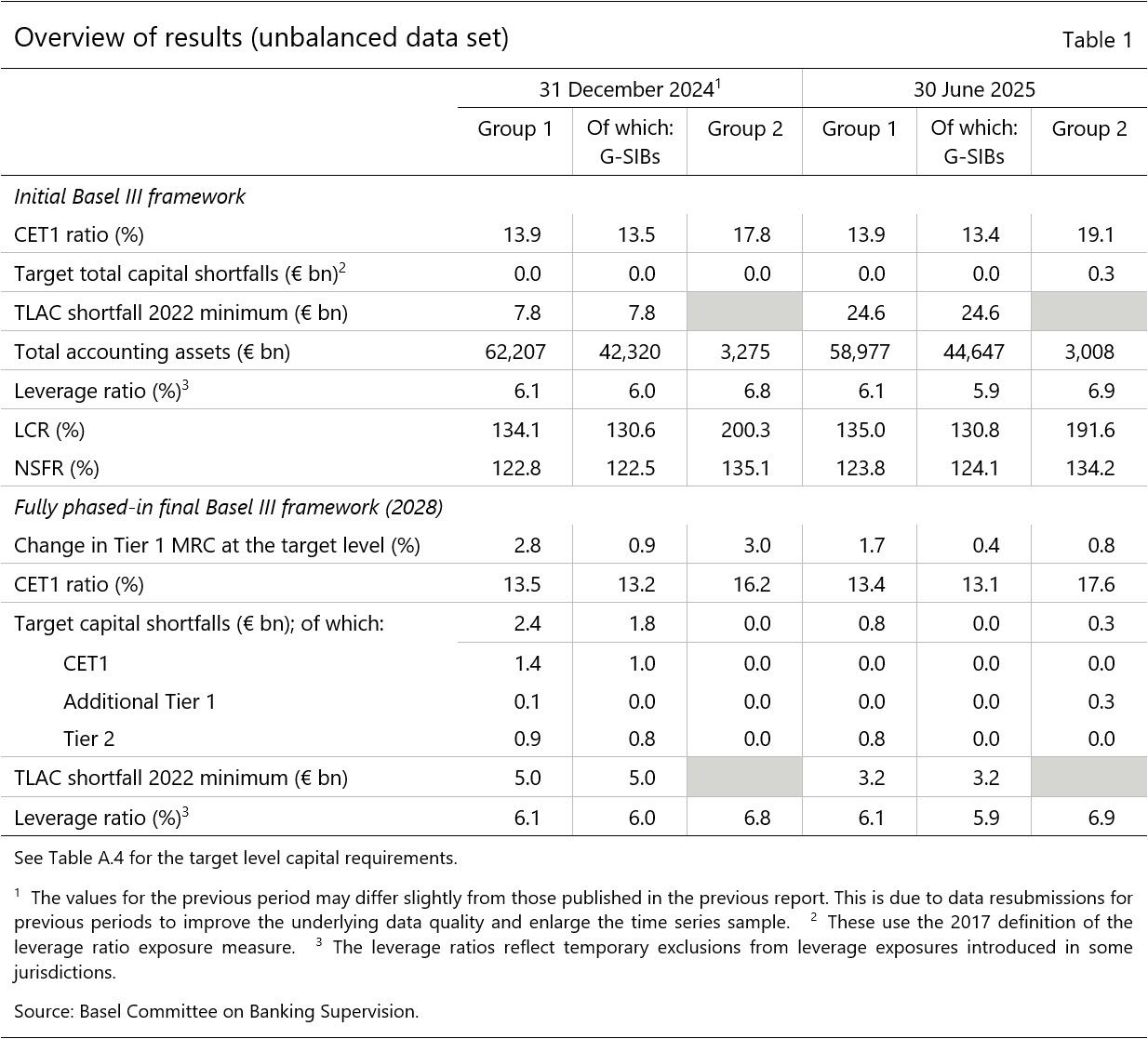
- Compared with the December 2024 reporting period, the average Common Equity Tier 1 (CET1) capital ratio under the current Basel III framework was stable at 13.9% for the unbalanced sample of Group 1 banks.
- The average impact of the Basel III framework on the Tier 1 minimum required capital (MRC) of Group 1 banks and for G-SIBs decreased when compared with December 2024 (by –1.1 and
–0.5 percentage points, respectively), driven by implementation progress. - Banks in the H1 2025 sample show a cumulative capital shortfall of €1.0 billion under the final Basel III framework.
- Applying the 2022 minimum total loss-absorbing capacity (TLAC) requirements and the current Basel III framework, 14 G-SIBs reporting TLAC data reported an aggregate incremental shortfall of €3.2 billion.
- The average Liquidity Coverage Ratio (LCR) of Group 1 banks increased slightly (+0.8%) compared with December 2024, mainly due to lower net outflows compared with the previous period. The average Net Stable Funding Ratio (NSFR) increased slightly (+1.1%) in the same period because of a smaller increase in required stable funding (RSF) compared with available stable funding (ASF).
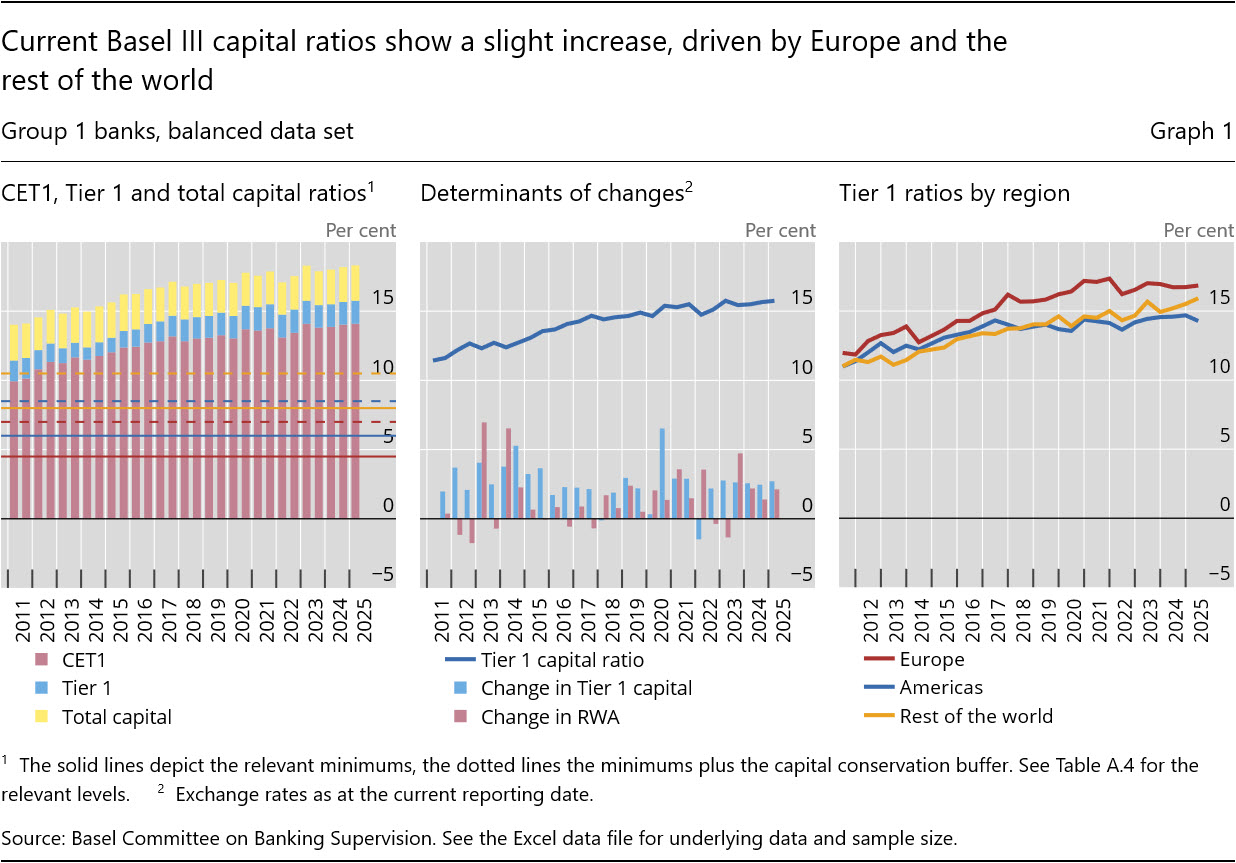
- The balanced data set for Group 1 banks showed a small increase (+0.1%) in current Basel III capital ratios in June 2025 in comparison with December 2024, driven by an increase in Tier 1 capital of a larger magnitude than the increase in risk-weighted assets (RWA). The overall CET1 capital ratios for Group 1 banks in the balanced data set were 14.1% in June 2025.
- Currently, the Tier 1 capital ratios are higher in Europe than in the Americas and the rest of the world. However, this relationship was reversed from 2011 to 2014. The rest of the world is the main driver for the increase in H1 2025 (+2.7%).
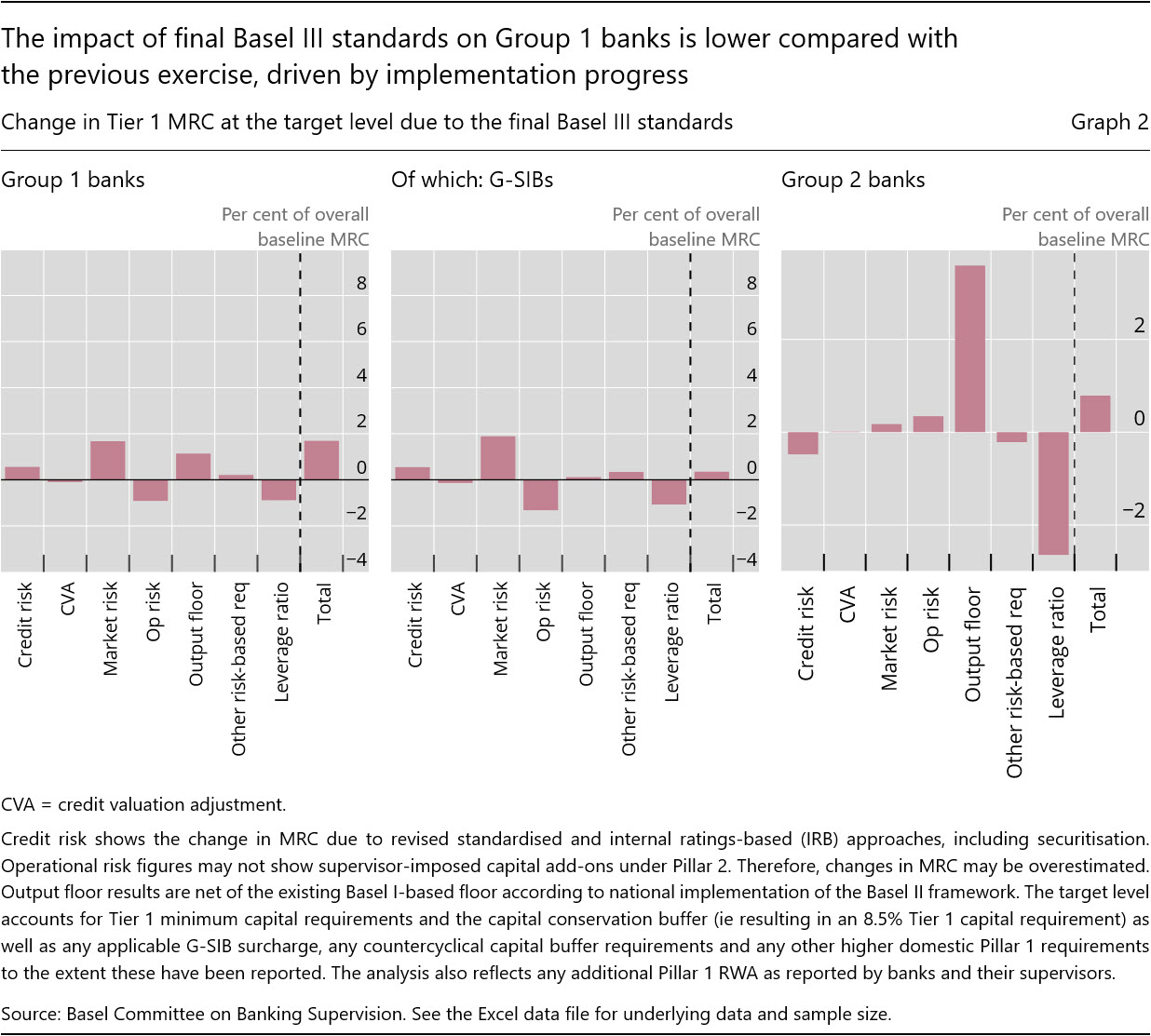
- For Group 1 banks, the Tier 1 MRC would increase by 1.7% following the full phase-in of the final Basel III standards. The increase in the MRC is underpinned by the incremental impact of the risk-based requirements of 2.6%, offset by the reduction in leverage ratio requirements by
–0.9 percentage points. The increase in risk-based components is mainly driven by market risk (+1.7%). - The impact on MRC across regions varies considerably for Group 1 banks. There is a low impact for European banks (+1.0%) and the rest of the world (+3.9%), while the impact is negative for the Americas (–1.7%).
- For Group 2 banks, the overall 0.8% impact on Tier 1 MRC is driven by a 3.4% increase in the risk-based measures, stemming mainly from the output floor (+3.6%), which is partially offset by a reduction in leverage ratio MRC (–2.6%).
- This is the first period in which banks in the European Union reported results under their national final Basel III standards for all risk types but market risk. Banks with full implementation of the final Basel III standards for all risk types may still contribute to the change in MRC shown in the impact analysis due to any remaining phase-in arrangements, for example regarding the level of the output floor. Considering the overall report sample of 101 Group 1 banks for the June 2025 reporting period, 28 banks for Europe, 13 banks for the Americas and 44 banks for the rest of the world were included in the Group 1 banks' impact analysis.
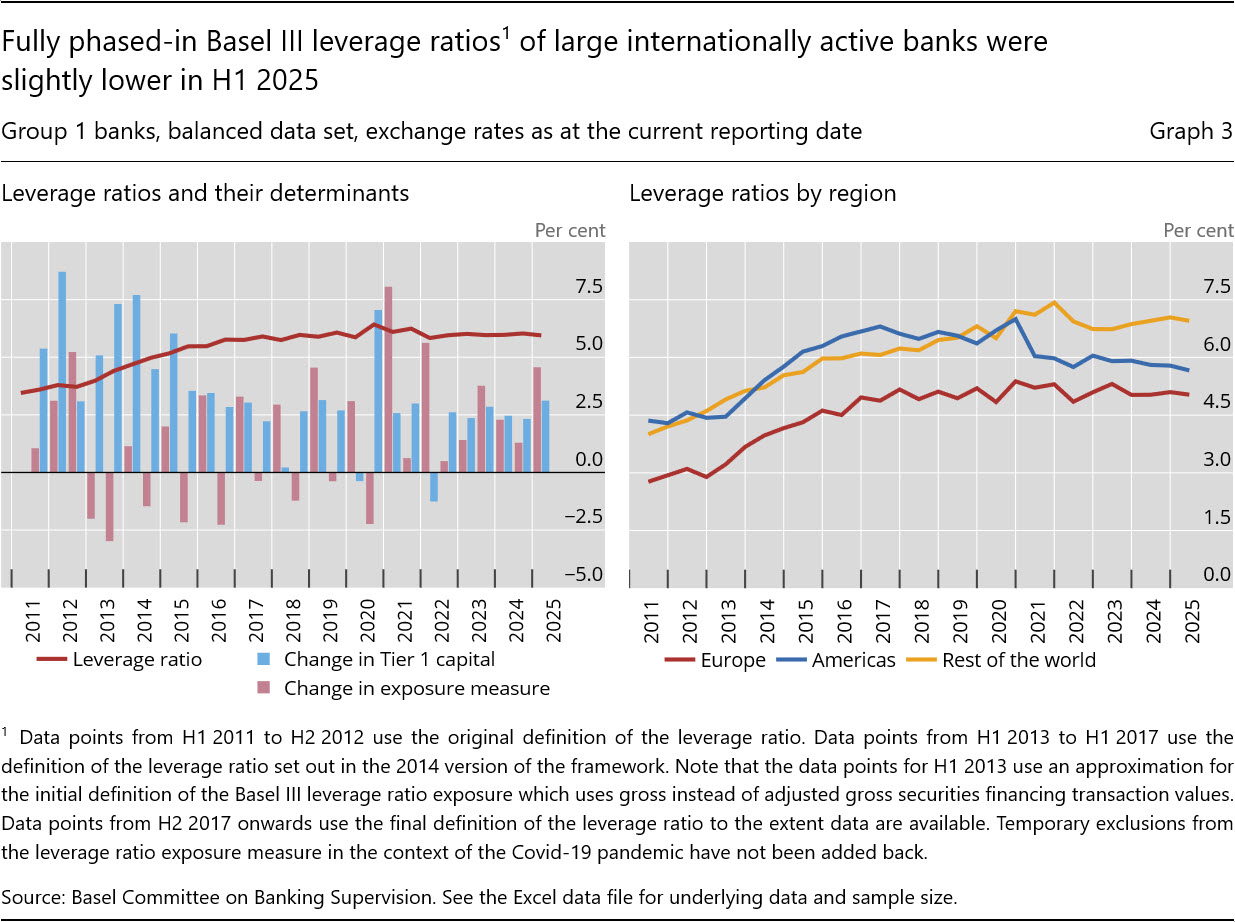
- For the balanced data set of Group 1 banks, the leverage ratio was slightly lower during H1 2025 in comparison with the previous reporting period. This contrasts with the sharp decrease that started at end-2021, particularly for the Americas.
- Leverage ratios for Group 1 banks are still lower in Europe (5.0%) than in the Americas (5.7%) and the rest of the world (7.0%).
- For the unbalanced data set as of the June 2025 reporting date, the average fully phased-in final Basel III Tier 1 leverage ratios are 6.1% for Group 1 banks, 6.0% for G-SIBs and 6.9% for Group 2 banks.
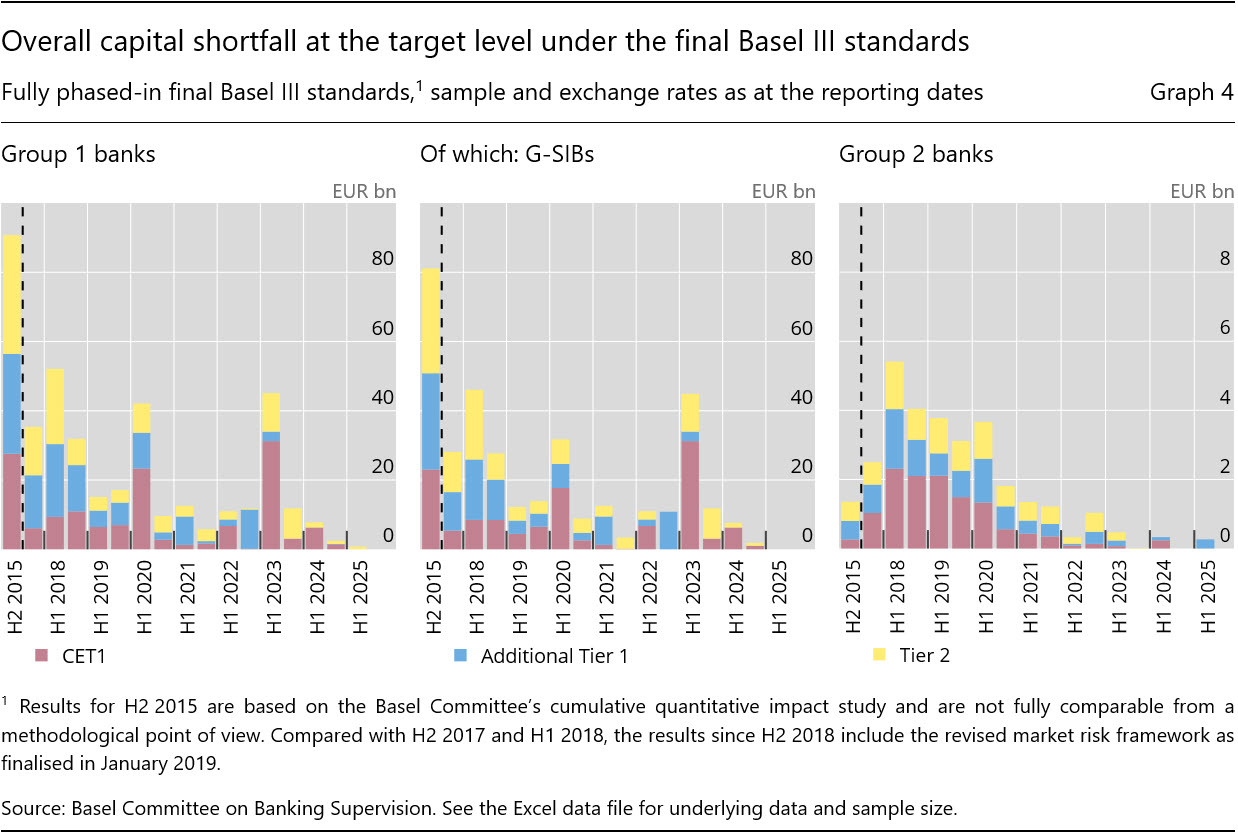
- For this reporting date, banks in the sample reported a regulatory capital shortfall of €1.0 billion.
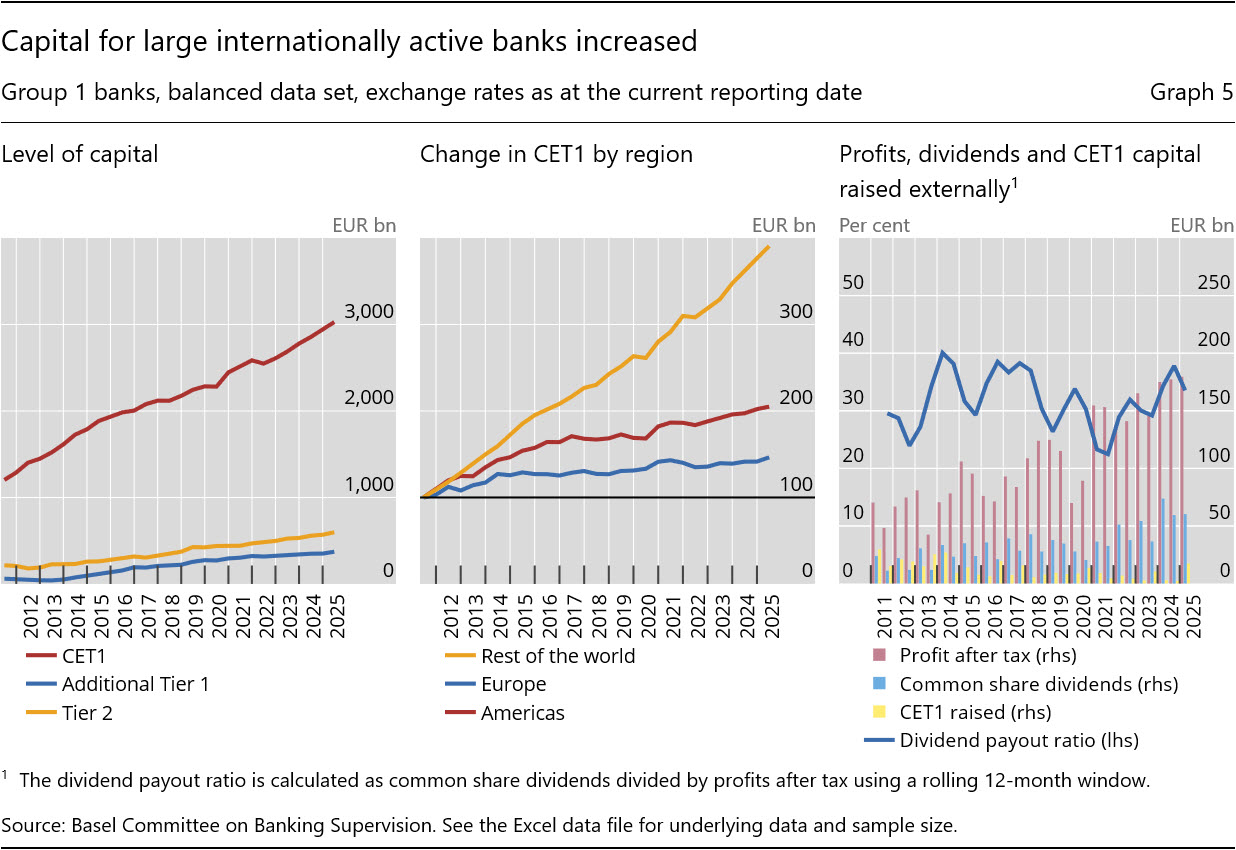
- From end-June 2011 to end-June 2025, the level of Group 1 banks' CET1 capital increased by 152% from €1,203 billion to €3,029 billion. Since end-December 2024, Group 1 CET1 capital has increased by €90.2 billion (or 3.1%).
- Over H1 2025, CET1 capital increased across all regions, with the most notable increment in the rest of the world.
- Overall, profits after tax increased for the Group 1 banks in the sample and stood at their highest level of €182.4 billion in H1 2025. The dividend payout ratio stood at 34.2%, which is about 109 basis points lower than the one reported in the preceding period.
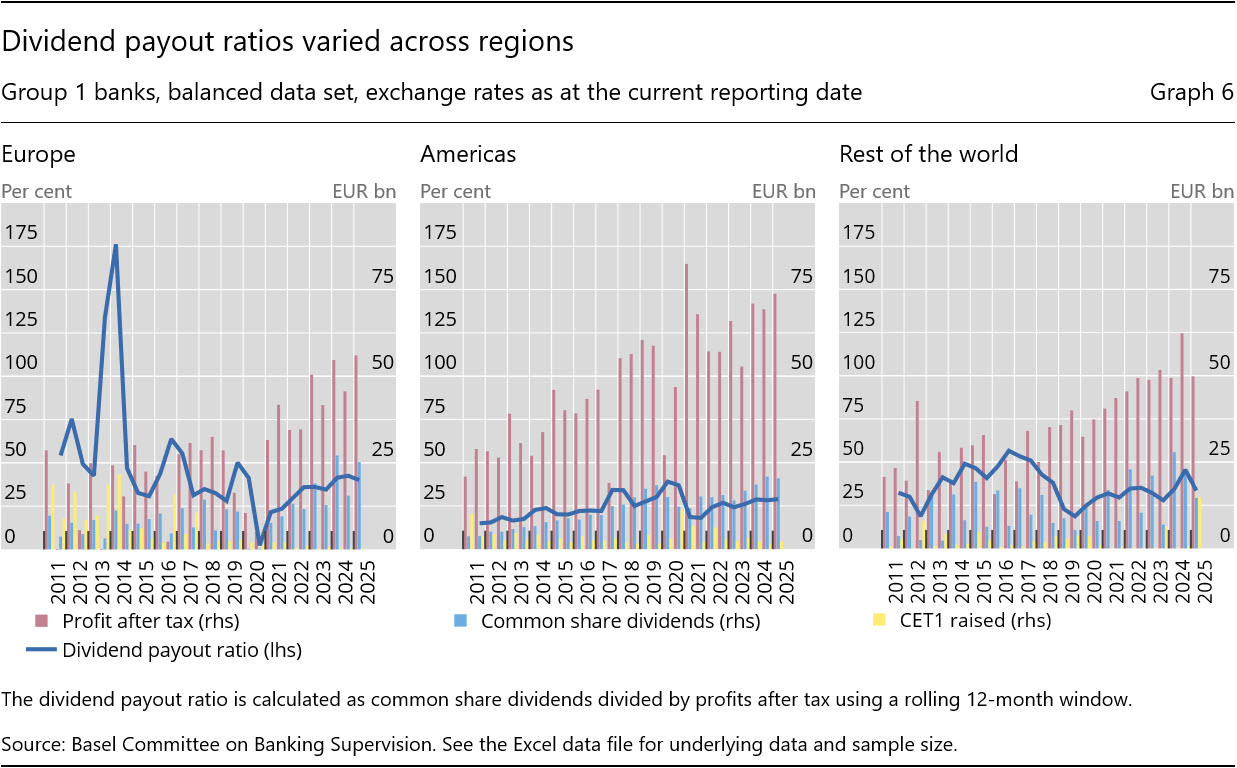
- Annual after-tax profits for Group 1 banks (ie summed up over two consecutive reporting dates) increased in all regions, with Europe showing an increase of 5.5%, the Americas of 15.7% and the rest of the world of 10.8%, compared with the 12-month period ending June 2024.
- Compared with the previous reporting date, the annual dividend payout ratio has decreased in the rest of the world rand in Europe, while it has been stable in the Americas. It is significantly below the record high ratios observed in 2020 in the Americas, while it is at pre-pandemic levels in Europe and the rest of the world.
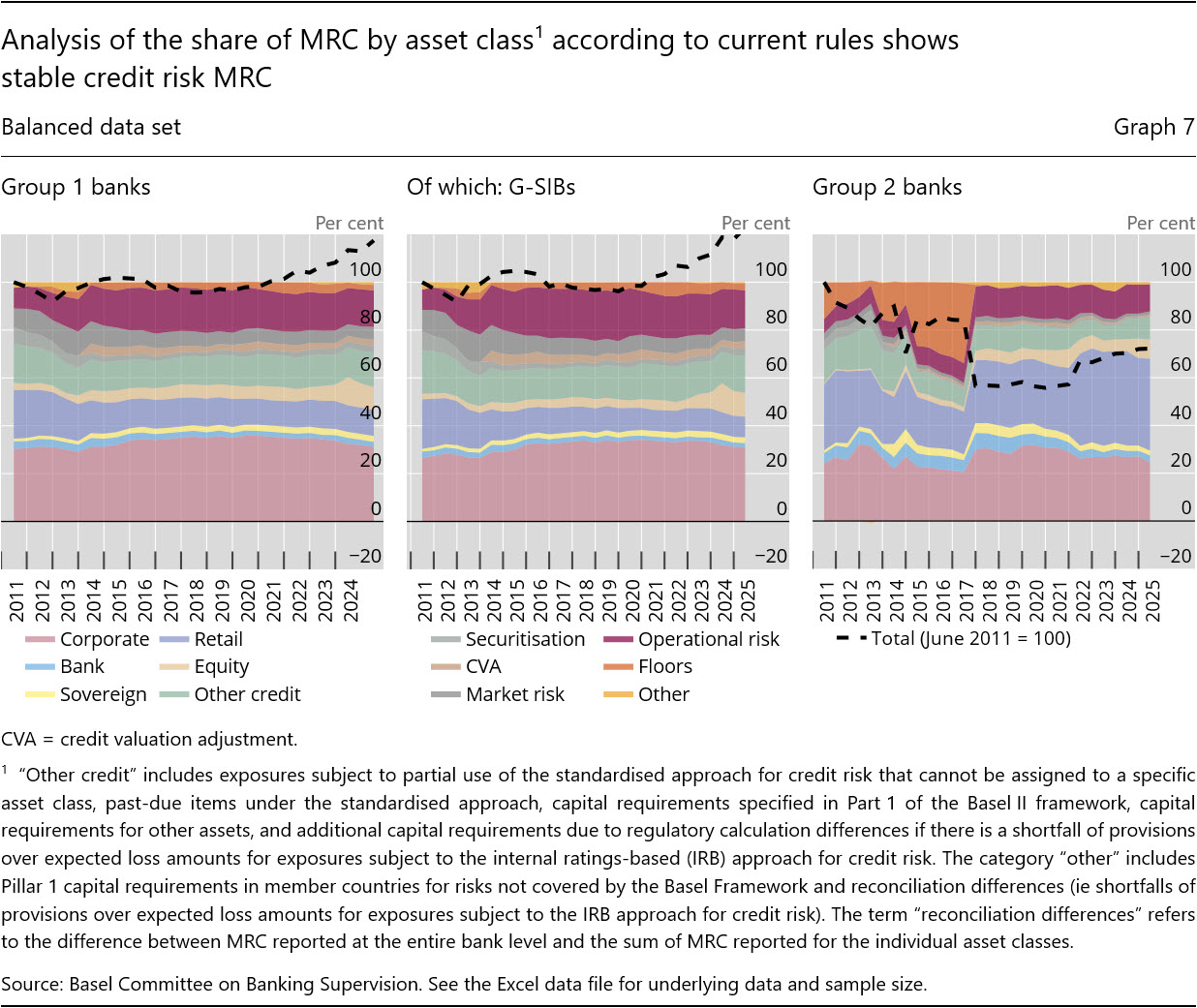
- As of June 2025 and for Group 1 banks, non-securitisation credit risk3 continues to be the dominant portion of overall MRC, on average covering 70.7% of total MRC. Among the non-securitisation credit risk asset classes, the share of MRC for corporate exposures increased from 30.4% at end-June 2011 to 31.2% at the current reporting date. In addition to this, the other credit exposure has experienced the biggest increase (+6.7%) in comparison with December 2024, and equity exposure has experienced the most significant decrease (–5.0%).
- The share of MRC for operational risk increased sharply from 8.6% at end-June 2011 to 18.1% at end-2016, and then decreased to reach 15.2% at the current reporting date. The increase in the early 2010s was attributed in large part to the surge in the number and severity of operational risk events during and after the financial crises, which are factored into the calculation of MRC for operational risk under the advanced measurement approach. More recently, there has been some "fading out" of the financial crisis losses so that in 2022 the lowest loss level of the previous 10 years is observed. This explains the latest decrease in capital requirements, especially for banks heavily affected by the Great Financial Crisis. In contrast, losses triggered by the Covid-19 pandemic have not yet had a significant impact on the loss severity level, but this may realise in the near future.
- The share of MRC for securitisation exposures has halved between end-June 2011 and end-June 2025.
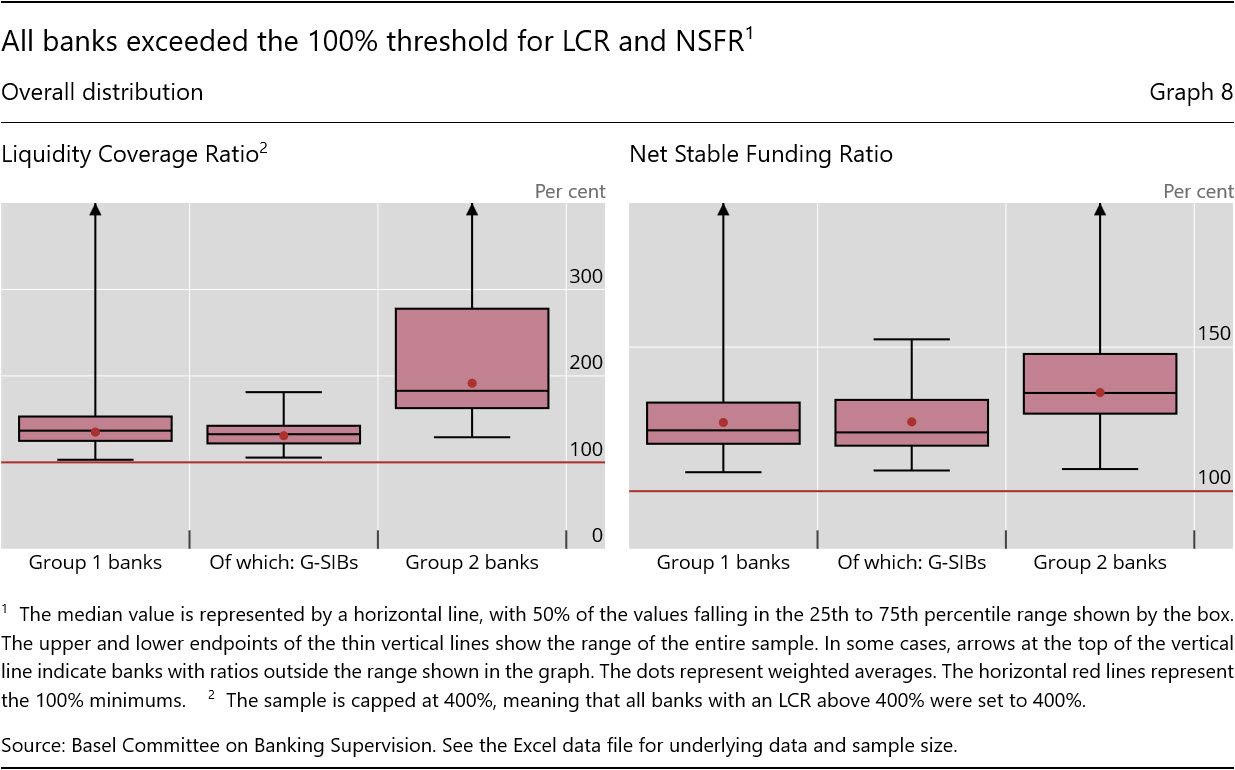
- The weighted average LCR was 135.0% for Group 1 banks and 191.6% for Group 2 banks at end-June 2025.
- In the current reporting period, all banks reported an LCR above 100%, and hence no shortfall, compared with an €18.3 billion shortfall for three banks reported in December 2024.
- The weighted average NSFR was 123.8% for Group 1 banks and 134.2% for Group 2 banks at end-June 2025.
- All banks reported an NSFR in excess of 100%.
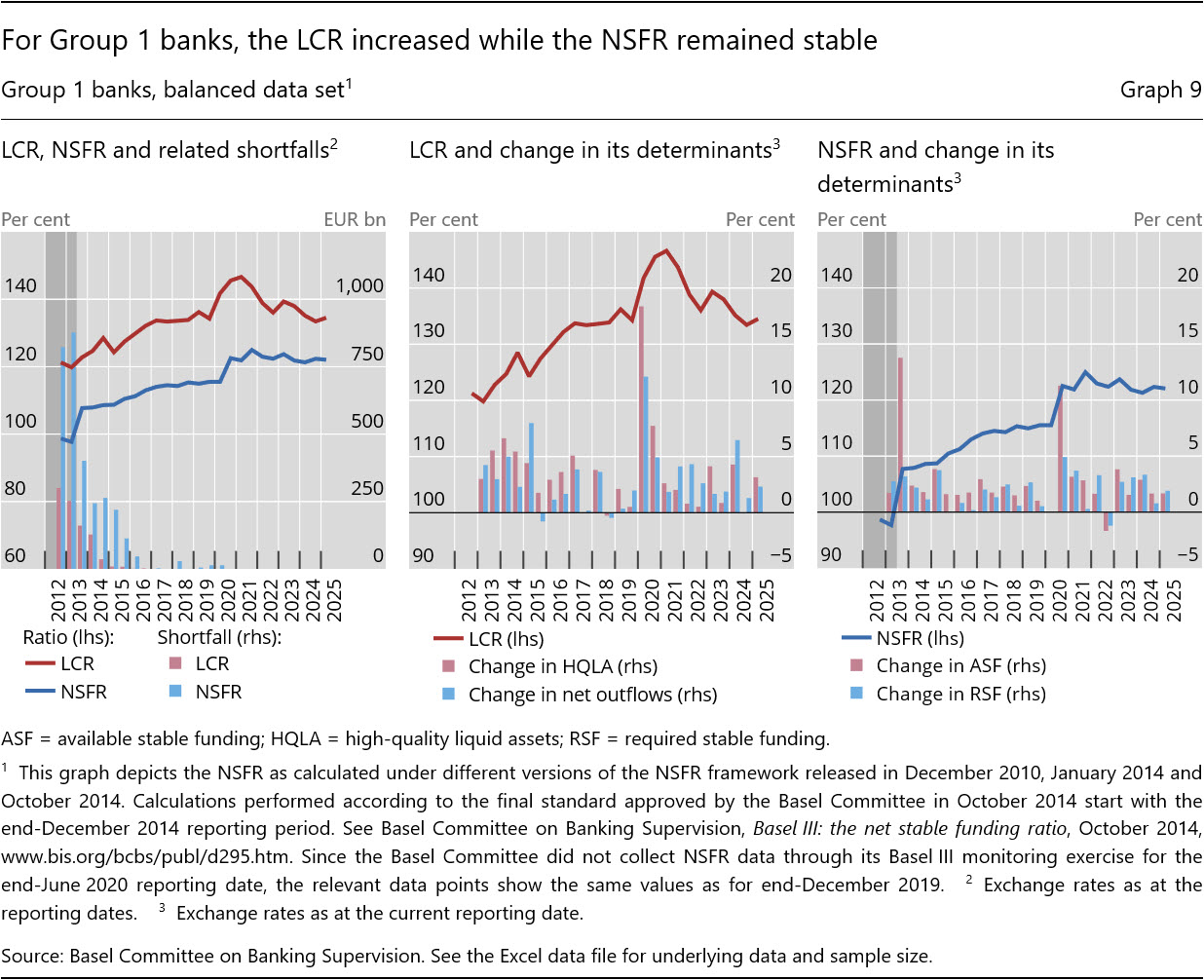
- For a balanced data set of Group 1 banks, all banks met a 100% LCR at end-June 2025, resulting in no shortfall, same as at end-December 2024. The average LCR for this sample increased to 134.5% at end-June 2025 compared with 133.4% in the previous reporting period. Banks in the sample did not experience drops in the LCR during the turmoil that some banks outside the monitoring sample experienced.
- There was no aggregate NSFR shortfall for the balanced data set of Group 1 banks. The average NSFR for the same sample of banks remained stable, shifting slightly from 122.3% as of December 2024 to 122.1% in June 2025.
- Both the LCR and NSFR were above pre-pandemic levels at the reporting date.
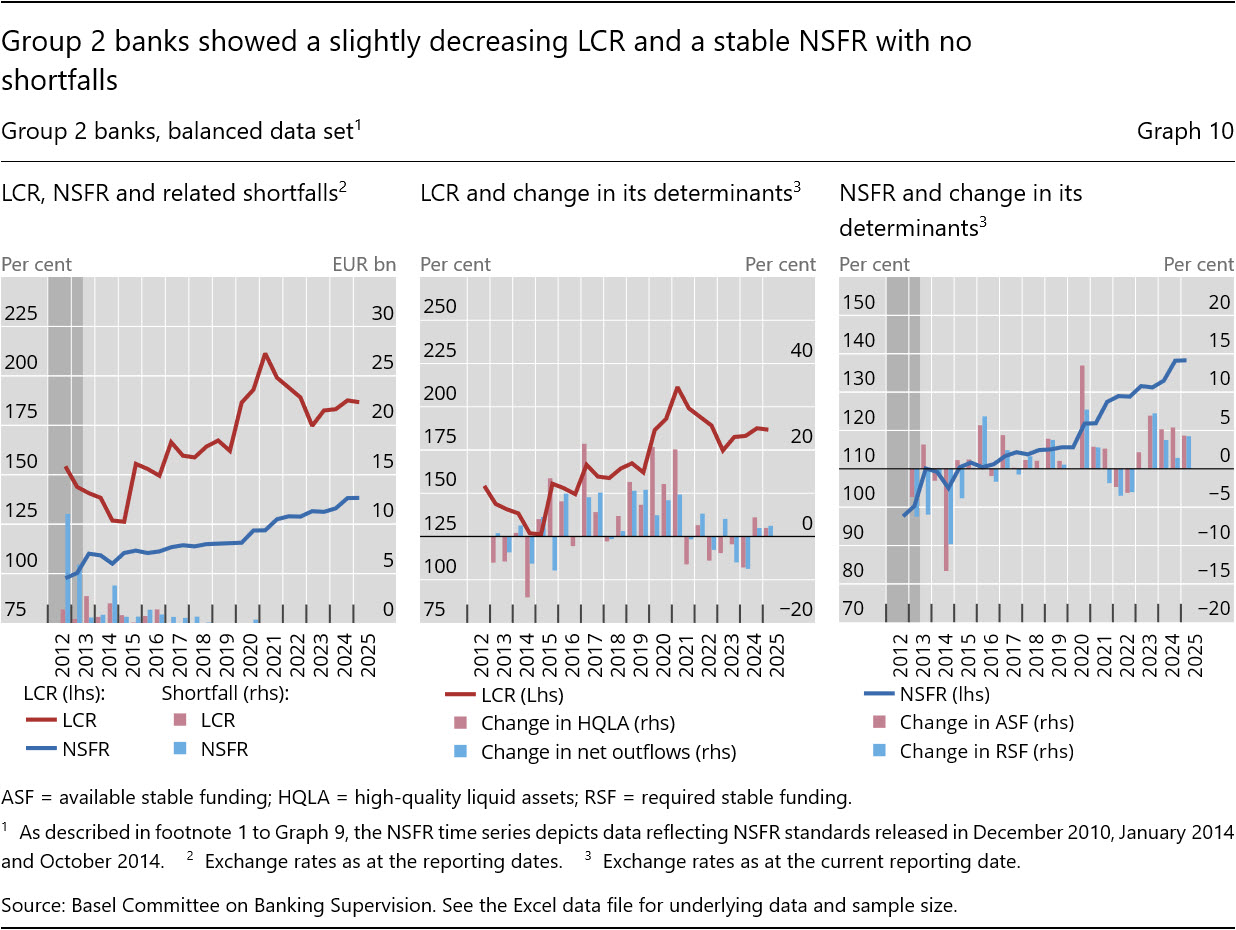
- For a balanced data set of Group 2 banks, the LCR shortfall has remained at zero since June 2017. The average LCR for the same sample of banks decreased by 0.9 percentage points to 186.7% in June 2025, due to a greater increase in net cash outflows compared with the last reporting date.
- The aggregate NSFR shortfall remained at zero for the balanced data set of Group 2 banks. The average NSFR for the same sample of banks increased marginally by 0.1 percentage points to 138.3 in June 2025 in comparison with the previous reporting date.
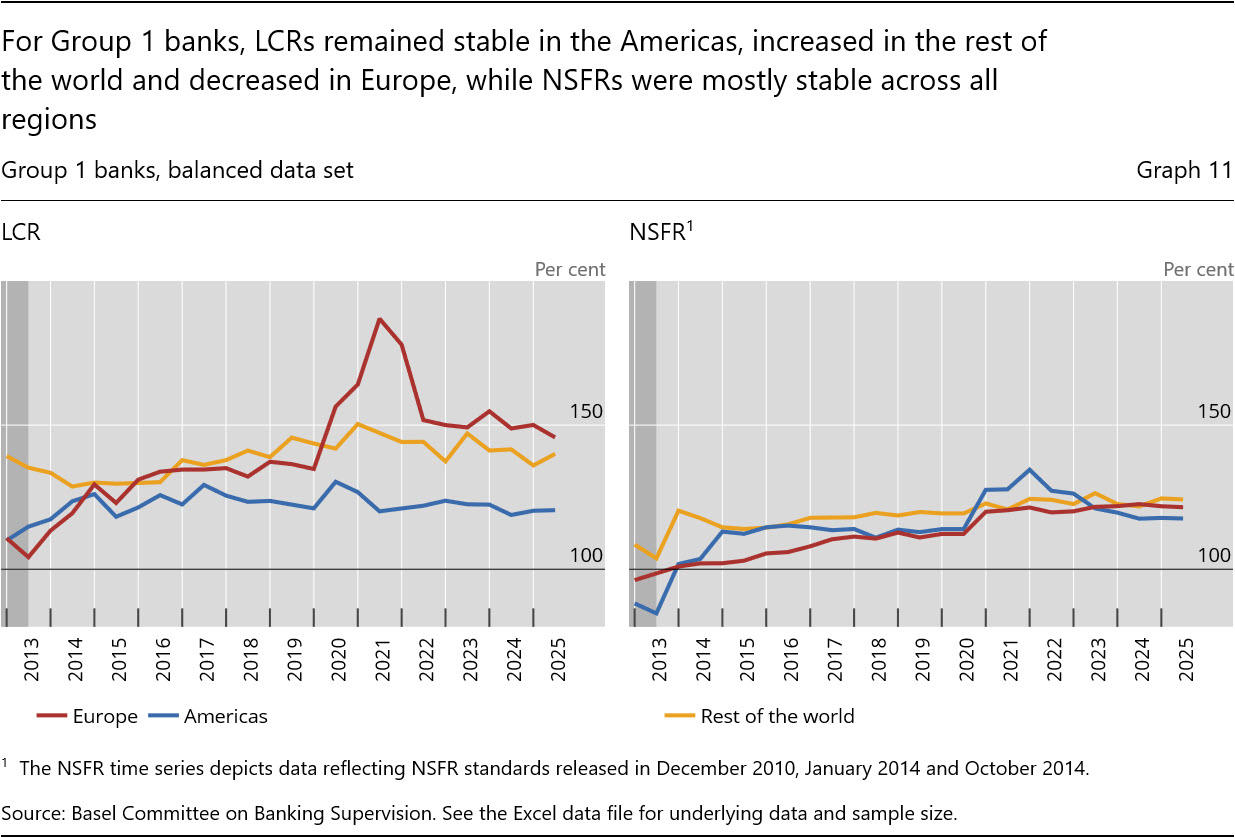
- Since 2020, the weighted average LCRs for both Europe and the rest of the world have largely been above 140%, while the average LCR for the Americas has been around 120%. While Europe and the Americas initially had lower average LCRs compared with the rest of the world, the average LCRs of Europe and the rest of the world tended to gradually converge before the onset of the pandemic. The regions with lower end-2012 average LCRs saw significant increases, in particular between end-2012 and June 2014, and Europe saw such increases again at the start of the pandemic. The increase in Europe reversed between June 2021 and June 2022, although since then the LCR of European banks is still above end-2019 levels.
- At end-June 2025 the weighted average NSFR or Group 1 banks in each of the three regions was well in excess of 100%. The average NSFR at end-June 2025 across all three regions remained stable, with less than 0.5-percentage point changes in the NSFRs from December 2024. After a significant drop during H1 2022, the NSFR of banks in the Americas slowly reverted, landing at 117.6% at June
3 Footnotes
| 1 | See Basel Committee on Banking Supervision, High-level summary of Basel III reforms, December 2017, www.bis.org/bcbs/publ/d424_hlsummary.pdf; Basel Committee on Banking Supervision, Basel III: finalising post-crisis reforms, December 2017, www.bis.org/bcbs/publ/d424.htm. |
| 2 | Group 1 banks are those that have Tier 1 capital of more than €3 billion and are internationally active. All other banks are considered Group 2 banks. Not all banks provided data relating to all parts of the Basel III framework. |
| 3 | Here, non-securitisation credit risk is defined as the sum of corporate, bank, sovereign, retail, equity and other credit, as illustrated in the graph. |